How to choose a filter coffee machine
ECBC and SCA are not the same certification, even though they get cited as if they were interchangeable. Knowing who declares what is the quickest way to tell how seriously a machine was engineered.
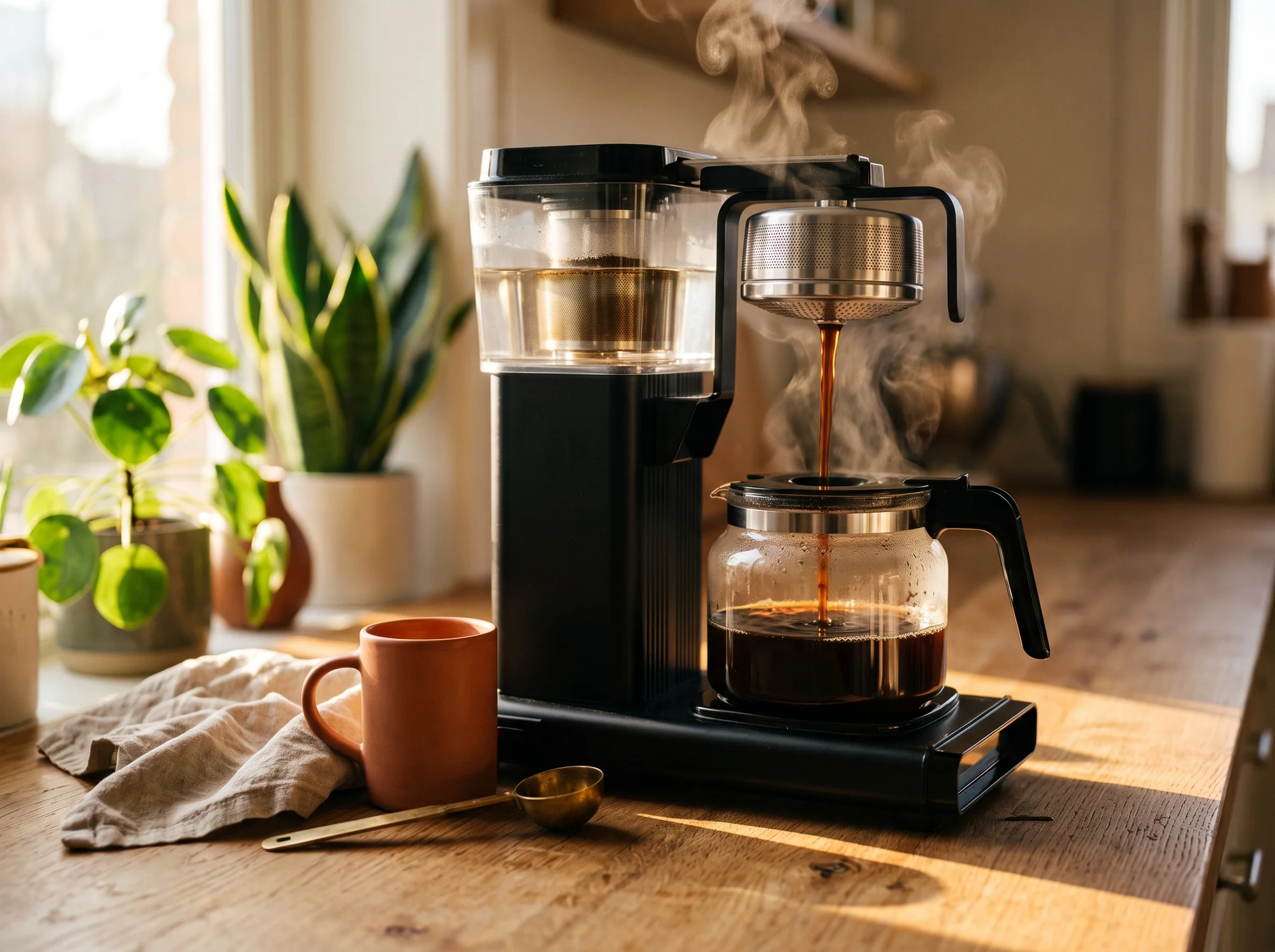
The filter coffee machine is the simplest appliance in the catalogue — a tank, a heating element, a tube carrying water above the filter — and precisely for that reason it is the one where design details matter more than anywhere else. There is no pump to calibrate and no group to learn to use: the machine does everything by itself, and whether it does it well or badly depends on choices the manufacturer made once and for all, at the factory.
ECBC and SCA are not the same thing
They are two distinct bodies, with two distinct protocols, and they get cited in marketing as if they were synonyms. Both essentially test the same thing — whether the machine manages to brew coffee under conditions the industry considers correct — but they do it with their own criteria: the water temperature during brewing, its even distribution over the coffee bed, the contact time. A machine can pass one of the two protocols and not the other, because the parameters checked and the thresholds do not match point for point.
The practical point is that one certification does not imply the other. Seeing one on the box tells you nothing about the other: if a specific certification matters to you, look for it by name, not for "some certification or other".
What our catalogue really declares
As of 7 September 2026 the filter coffee machines in our catalogue number 34. Ten declare ECBC certification and four declare SCA; of these, three entries declare both, seven declare only ECBC and just one declares only SCA. The majority of the catalogue — 23 entries out of 34 — declares neither.
That is a figure to read for what it is, with the same caution we use for every other catalogue number: not declaring a certification does not mean not having it, it means it does not appear in the official documentation we consulted. But the difference between "three entries declare both" and "most declare neither" remains a real fact, and it is the first useful question to ask when comparing two machines: which of the two declares it, and which declares it in full.
Brewing temperature, the heart of both protocols
The certifications converge on one point: the water has to reach the coffee within a precise temperature range, not simply "hot". We cover it at length in ECBC, SCA and brewing temperature; here it is enough to know it is the parameter most cited in the official documents of certified machines, and one of the easiest to check at a glance: if the manufacturer declares it as a range with a minimum and a maximum, that is a good sign the machine is not working at a single, undifferentiated fixed temperature.
Thermal or glass carafe
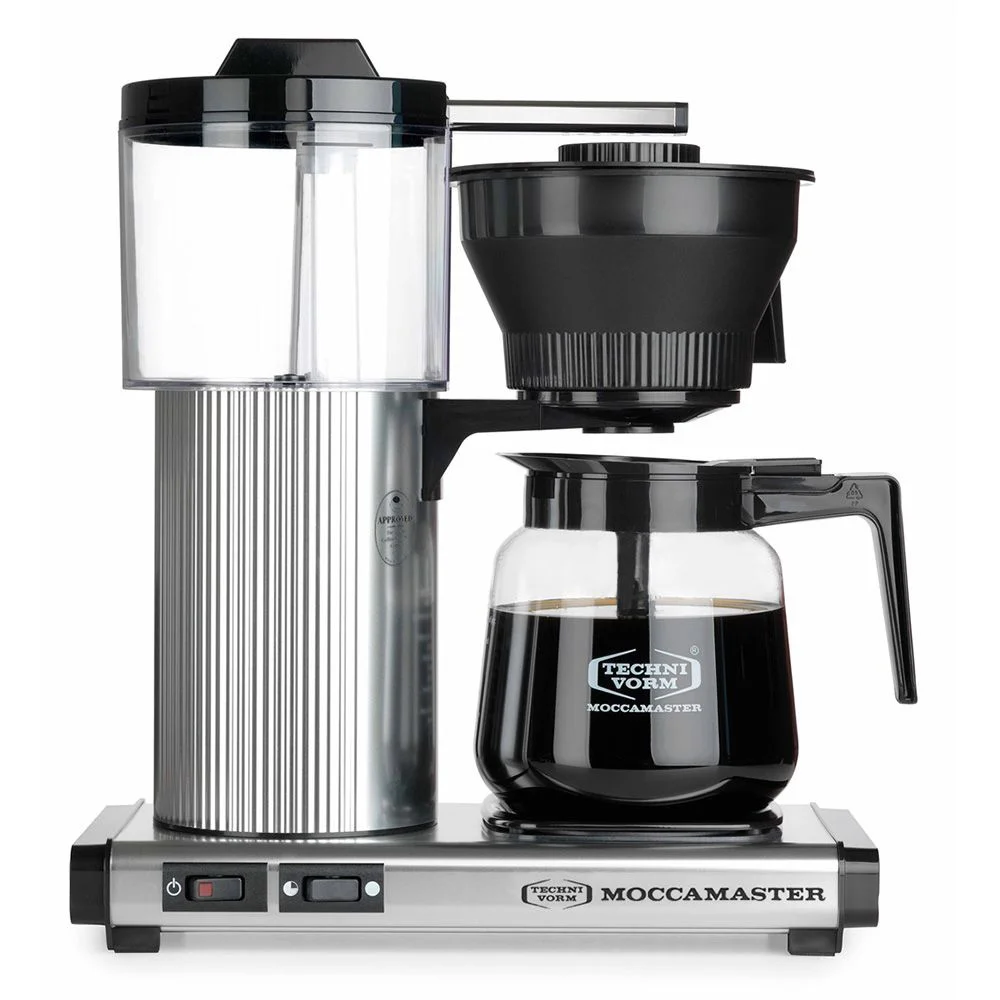
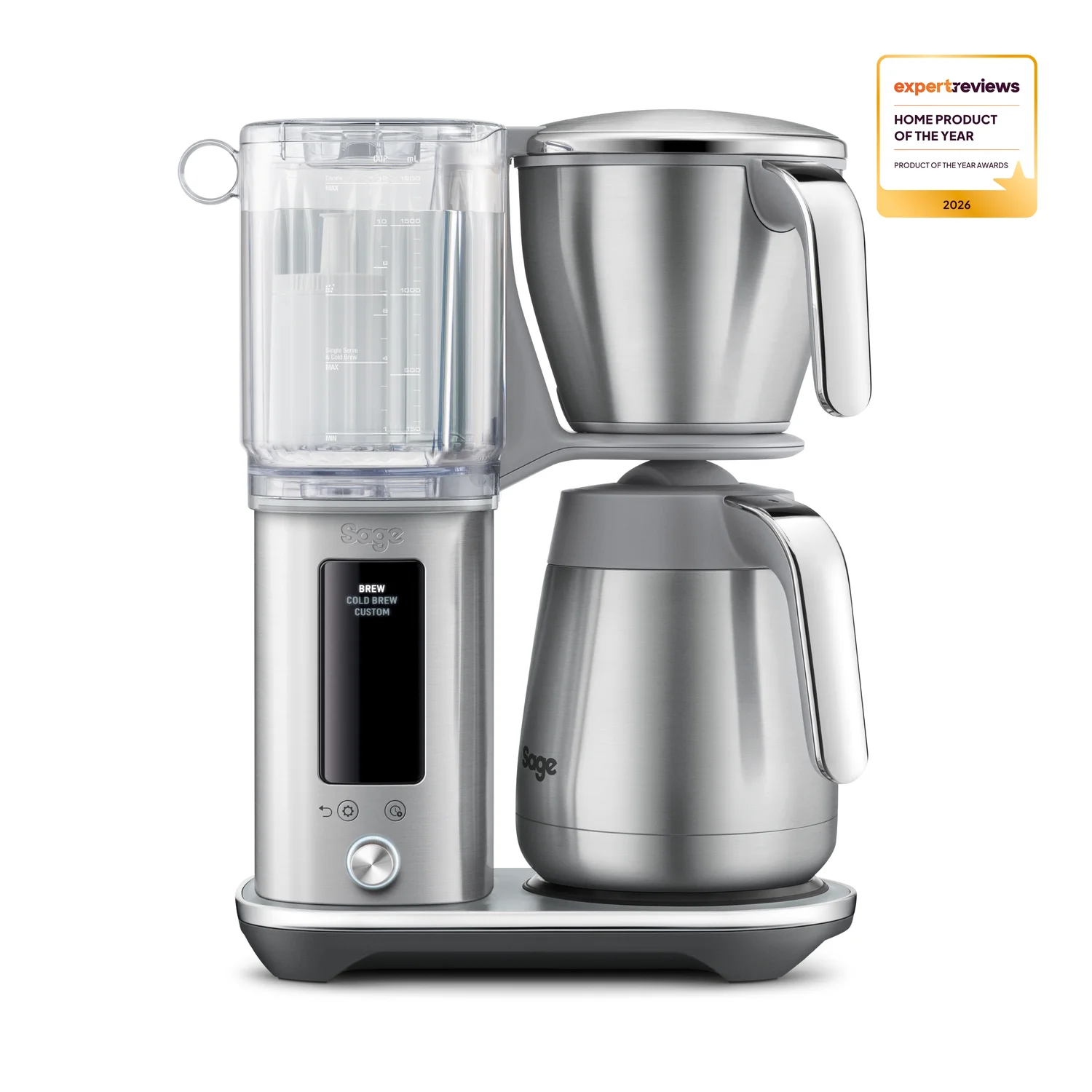
It is a simpler choice than it looks, and it concerns what happens to the coffee after brewing, not during. A glass carafe sits on the heating plate, which keeps the coffee warm by continuing to heat it from below — convenient, but the coffee concentrates and loses aromatics with the minutes. A thermal carafe insulates the freshly made coffee and keeps it warm with no external heat source, so without continuing to extract it. Of the 34 entries in our catalogue, the majority declare a thermal carafe: it is the solution the more carefully engineered manufacturers choose when they can afford the extra cost of the double insulating shell.
Integrated grinder
Some machines grind the beans just before brewing, others start from already-ground coffee. The advantage of an integrated grinder is freshness — less time passes between grinding and contact with the water, fewer volatile aromatics are lost — paid for with a burr set that, being part of an appliance designed for something else, rarely reaches the quality of a dedicated grinder.
How to decide, in practice
- You want a machine that meets a verifiable standard. Look at which certification it declares, by name — it is not enough that it declares "one".
- You drink the coffee over the course of an hour, not straight away. Thermal carafe, no exceptions: that is where you see the difference between coffee that is still good and coffee concentrated by the plate.
- You want maximum freshness and are willing to compromise on the burrs. Integrated grinder.
- You already have a good grinder. Ignore the integrated one and just look for the declared temperature and the carafe: those are the two variables that genuinely stay in the manufacturer's hands.
The full catalogue is here: filter coffee machines.