How to choose a milk frother
A standalone milk frother is not the steam wand of an espresso machine, nor the cappuccinatore of a bean-to-cup machine: it is an appliance of its own, with its own physics and its own maintenance.
The milk frother is the most misunderstood appliance in the catalogue, because its territory overlaps with two others that do the same job in a different way. It is worth separating them before looking at the data, because confusing the three is the most common cause of a wrong purchase.
Three ways of frothing milk, not one
A steam wand, on an espresso machine, froths milk by injecting steam directly into the liquid: you are the one governing air and vortex, and the achievable result is microfoam. We write about it at length in steam wand: panarello or professional wand.
An integrated cappuccinatore, on a bean-to-cup machine, does the same job inside a closed circuit the machine manages by itself — carafe, pickup tube or wand, depending on the system; we write about it in how to choose a bean-to-cup machine.
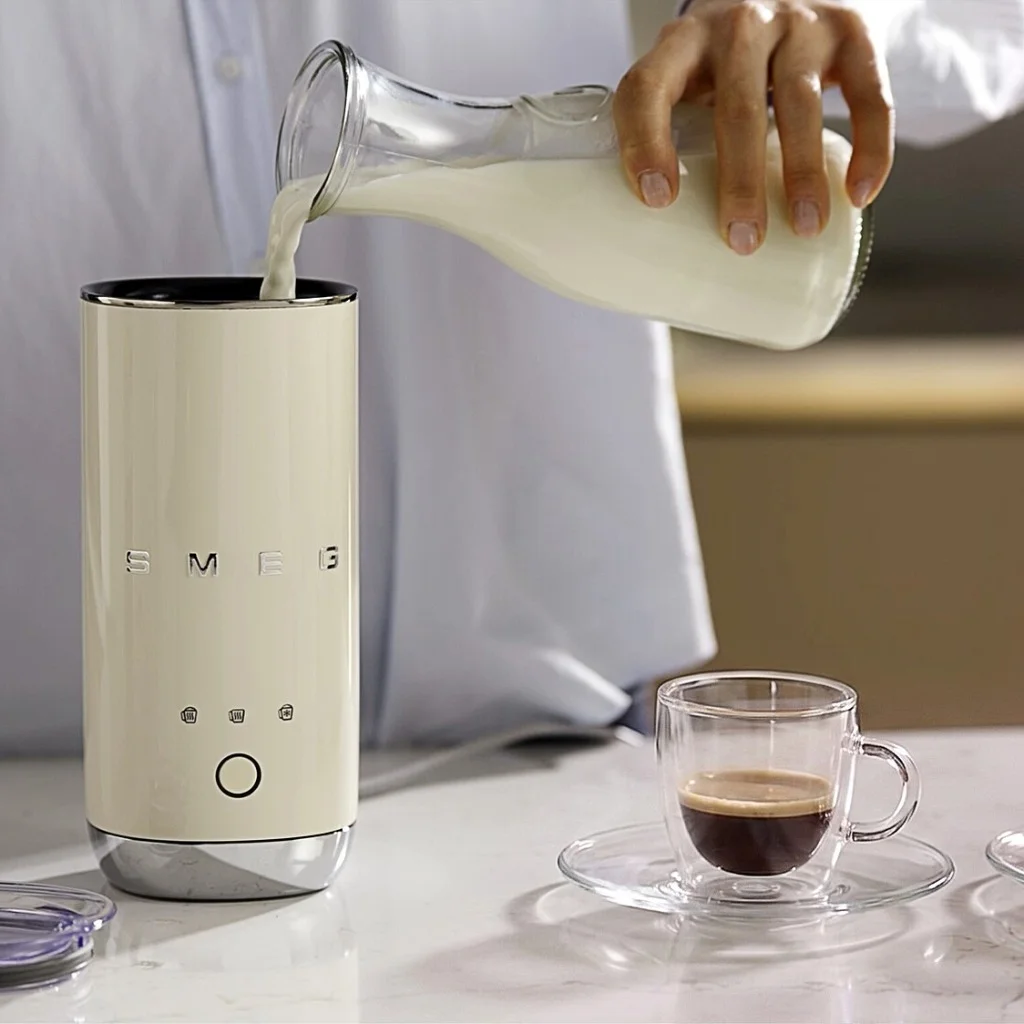
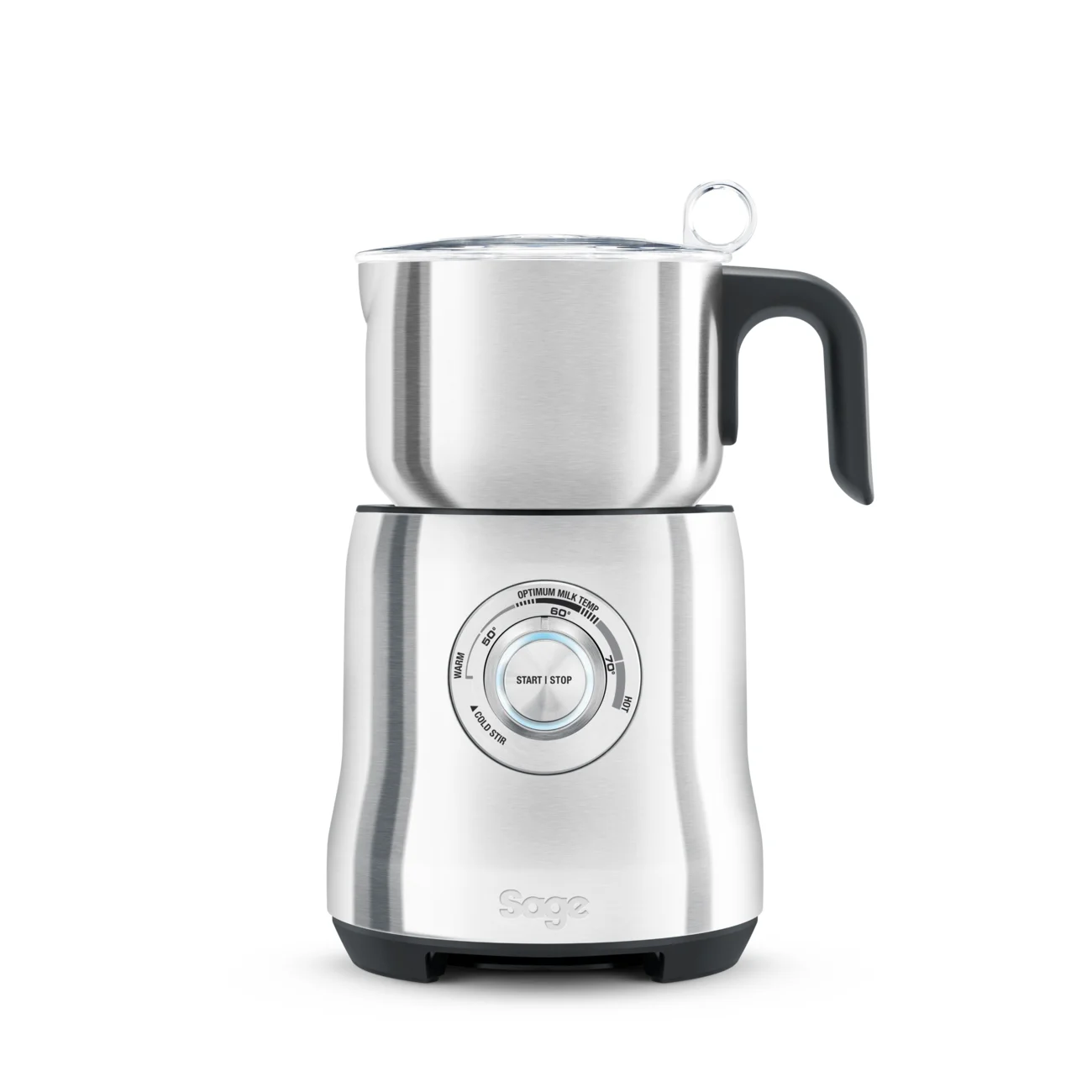
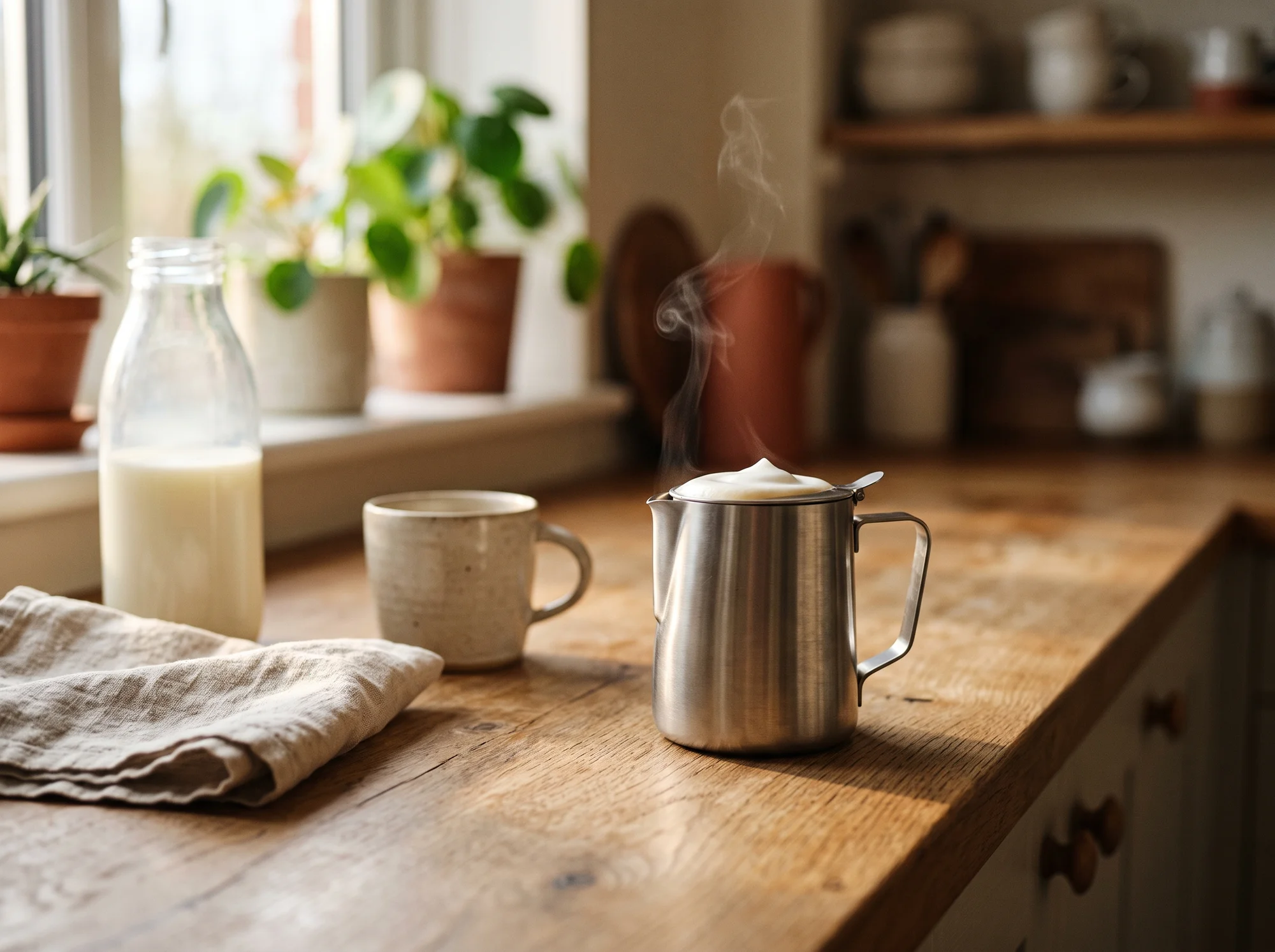
A standalone milk frother is an appliance in its own right, which depends on no coffee machine at all: a small carafe with a heating element or an induction plate at the base, and a whisk or disc that spins inside the milk. It is bought and used on its own, often alongside a machine that cannot froth milk at all — a moka pot, a filter machine, a capsule machine.
How it works, mechanically
The principle is different from steam: here air is not injected from outside, the milk is spun at controlled speed and temperature, incorporating air by mechanical agitation instead of injection. The result depends on the whisk's speed and geometry more than on the operator's gesture — which is why a milk frother gives more repeatable results than a steam wand, and also results that are, on average, less extreme: it does not reach the glossy microfoam of a well-used wand, but it does not produce the coarse foam of a badly used one either.
Electric or manual
Almost all the milk frothers in our catalogue are electric, with a heating element or an induction coil that warms the milk while agitating it. Manual frothers also exist, hand-operated — typically a carafe worked with a pump or a plunger and heated separately, on the stove or in the microwave. In our catalogue, 19 of the 21 entries declare an electrical draw in watts; the two exceptions are both from the same manufacturer, and one of the two describes itself explicitly, in the official documentation, as manual. The other does not declare a draw and its entry does not specify the type of operation: where the data is missing, it stays a gap instead of a guess.
Induction: not just a matter of the hob
Here "induction" does not mean the frother has to be placed on a hob: it means the appliance's own internal heating element works by induction instead of by direct contact, which generally translates into faster, more even heating along the walls of the carafe. Of the 11 catalogue entries that declare the type of heating, 8 declare induction and 3 do not.
Capacity and washability
The declared capacities, among the 19 entries that report them, range from 120 to 700 ml; the most frequent value is 250 ml, on 5 entries. It is a measure that matters more than it seems: a 120 ml frother is enough for one cup, a 700 ml one serves a whole family in a single cycle, and the two are not interchangeable.
On washability, of the 17 entries that declare it, 11 are dishwasher-safe and 6 are not. It is a straightforwardly practical fact: a frother that has to be hand-washed every time, with milk drying quickly on its walls, is one more chore to budget for every single morning.
How to decide, in practice
- Your machine cannot froth milk on its own (moka pot, filter, capsules). A standalone frother is the only way to have a cappuccino without changing machine.
- You drink alone, one cup at a time. Small capacity, 120-250 ml: a bigger one stays half empty and takes longer to clean.
- You serve several people at the same breakfast. Capacity of 500 ml or more, and check dishwasher-safety: that is where the difference shows between a quick gesture and an annoying one, repeated every day.
- You want the finest possible foam, and you are willing to learn it. That is not the territory of a standalone frother: that is the steam wand's.
The full catalogue is here: milk frothers.