Water, hardness and descaling
Limescale is not a manufacturing defect: it is what tap water leaves inside the machine, cycle after cycle. It is the first maintenance job, and the most overlooked.
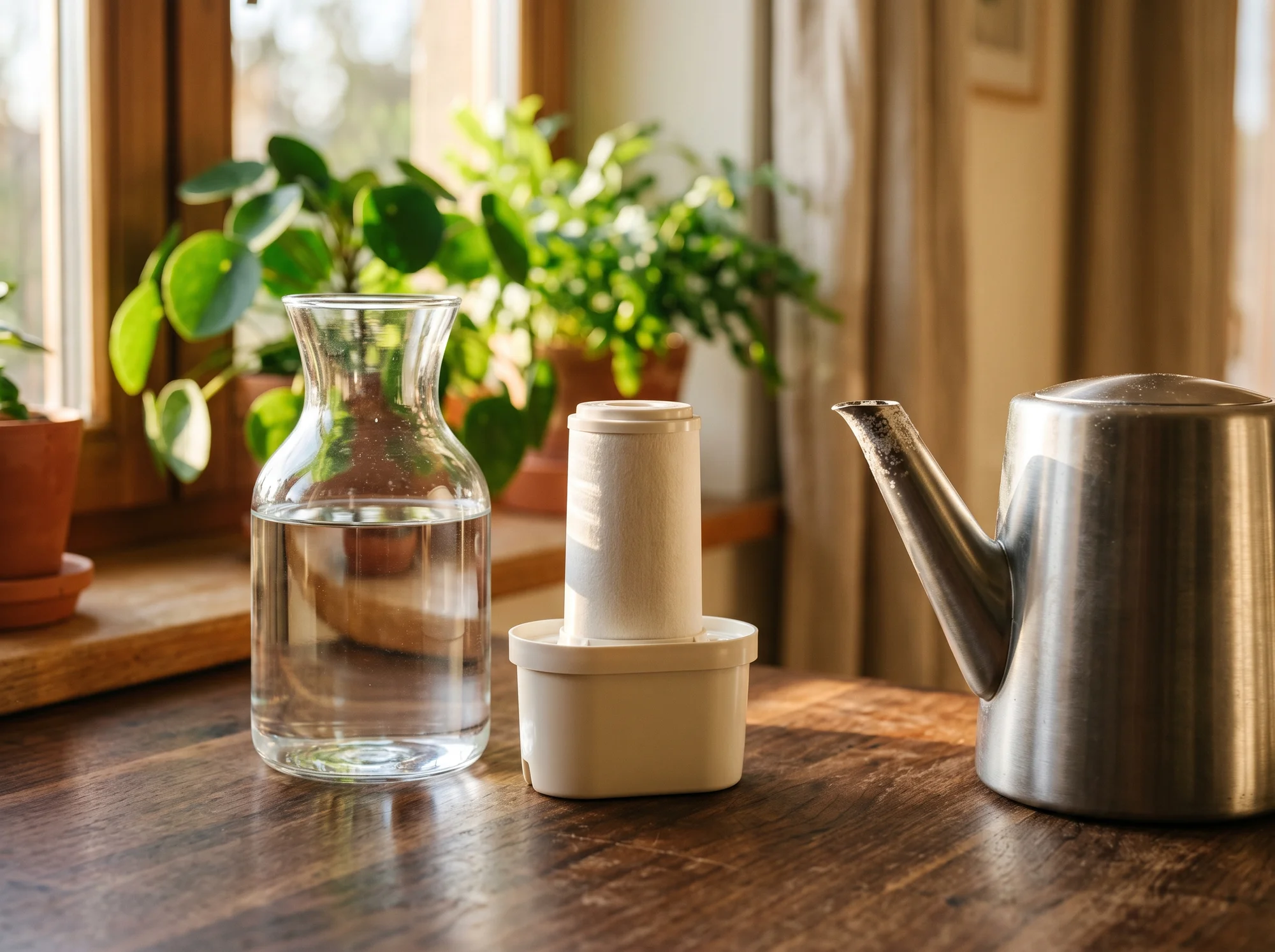
Anyone buying a coffee machine looks at the boiler, the group, the display. Almost nobody looks at the water that will end up inside it, and that is the most common and most costly maintenance mistake. Water is the first consumable: it is not an optional accessory, it is the substance that passes through every component of the machine, every day, for years.
What limescale does, mechanically
Tap water contains dissolved calcium and magnesium bicarbonates: that is what is called «hardness». As long as the water stays cold, nothing visible happens. When it is heated, those bicarbonates break down and the calcium precipitates as solid calcium carbonate — limescale — right on the hottest surfaces, which are exactly those of the boiler, the heat exchanger or the thermoblock.
The deposit is not just cosmetic. A layer of limescale thermally insulates the heating element from the rest of the water, so the machine takes longer and more energy to heat; it narrows tight passages — the steam wand, the three-way solenoid valve, the level probes — until it blocks them; and it distorts the reading of temperature sensors, which is why a scaled-up machine starts brewing at temperatures different from the ones it declares.
Why periodic descaling is not enough on its own
The descaling cycle every machine prompts at intervals is a corrective measure: it dissolves a deposit that has already formed, with a diluted acid circulating through the hydraulic circuit. It works, but it always arrives after the damage is done, and on some components — the gaskets, the heating elements already weakened by the heat trapped under the limescale layer — the damage is not fully undone even by dissolving the deposit.
Treating the water before it enters the machine, with a cartridge filter, is a preventive measure: it does not remove the need to descale, but it stretches the interval between one cycle and the next considerably, and reduces the stress on every component the hot water passes through.
How a cartridge filter works
The principle common to the filters in our catalogue is ion exchange: a resin swaps the calcium and magnesium ions dissolved in the water for sodium ions, which do not form deposits when heated. Some products add a second stage, typically activated carbon, that retains chlorine and organic residues responsible for odours and off-flavours.
There is a detail worth understanding, because one of the official documents in our catalogue states it explicitly: a filter almost never aims to remove all the hardness. An adjustable bypass lets a small share of untreated water back in, to keep residual hardness at a target value rather than at zero. Water that is too soft is not harmless: it turns chemically aggressive and corrodes metal surfaces just as effectively as limescale clogs them. The right filter is not the one that removes the most, it is the one calibrated to the actual hardness of your water at home.
What our catalogue says
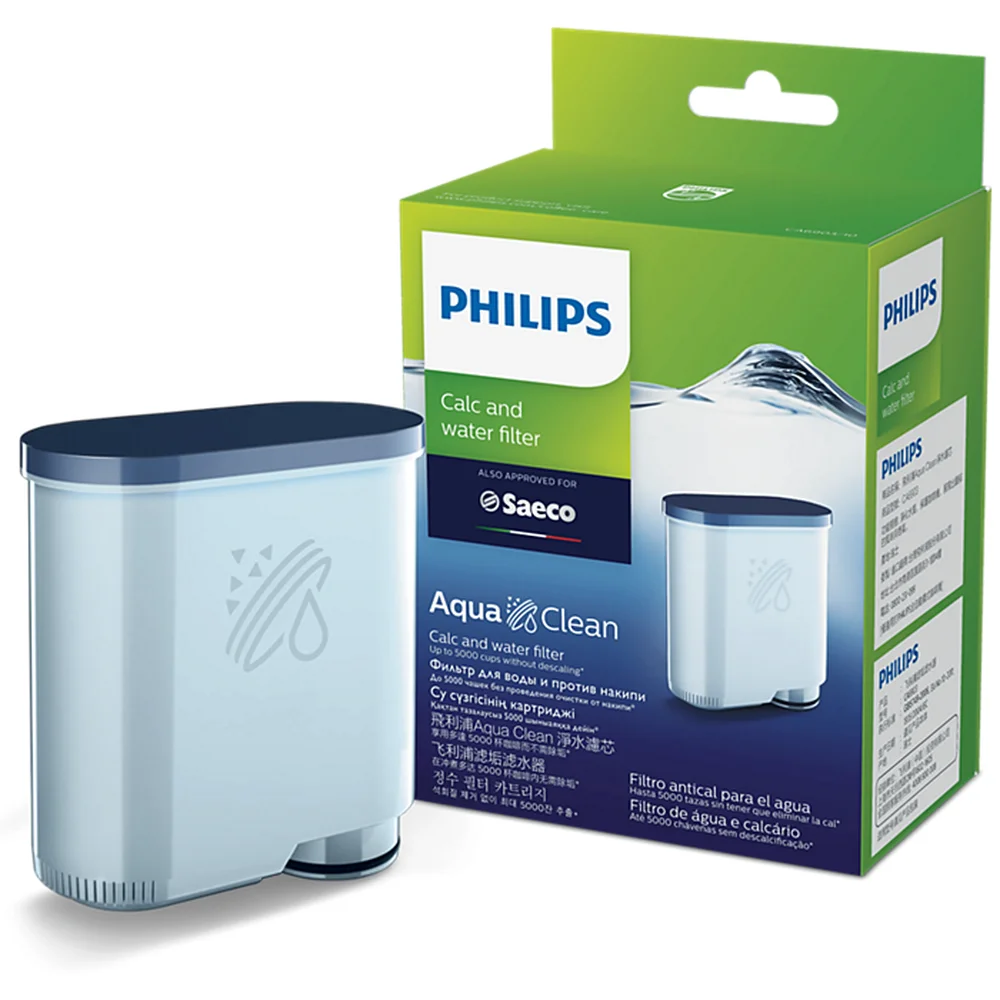
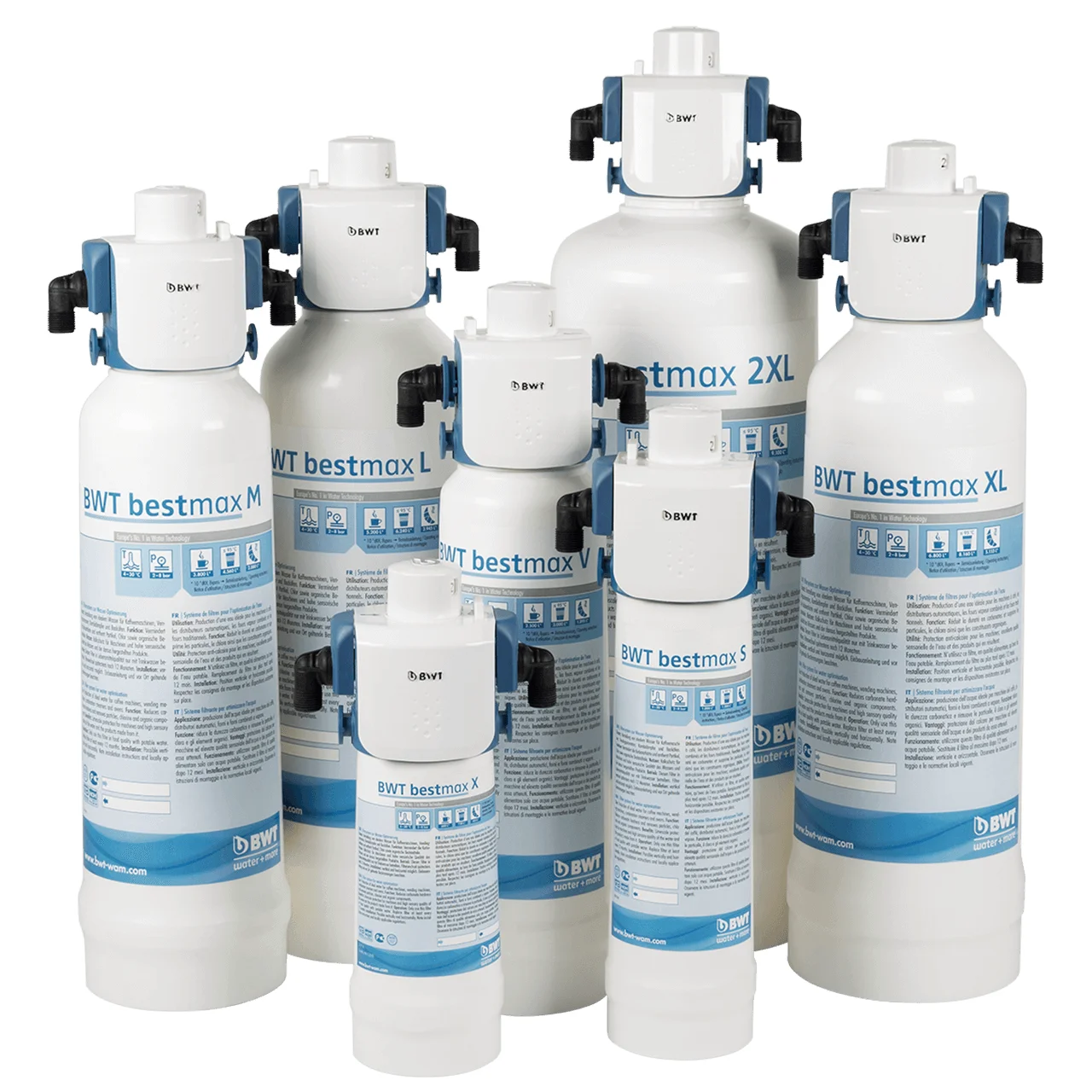
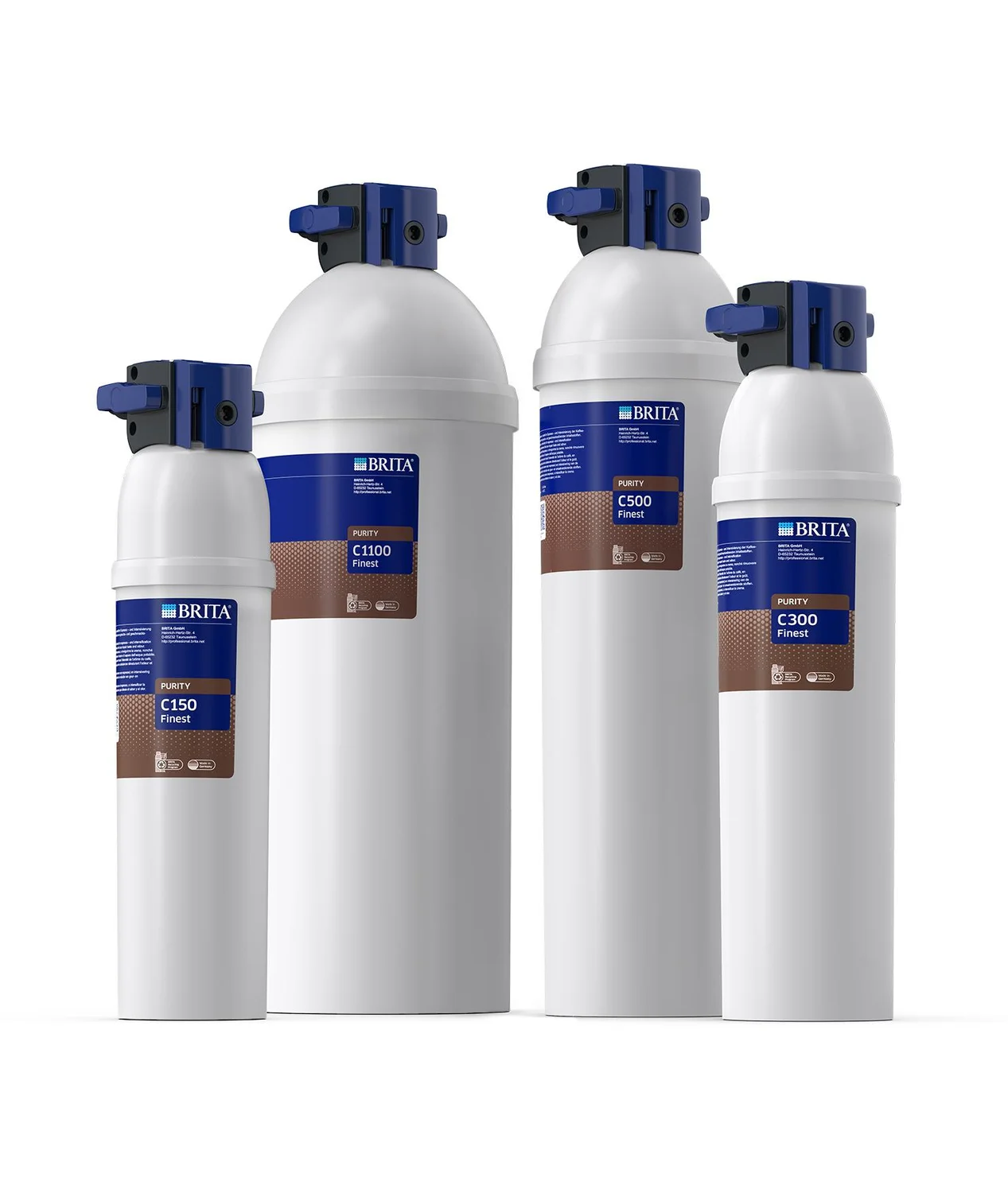
As of 7 September 2026 the water treatment products in our catalogue number 5, and all five declare that they reduce hardness. On the mechanism, the official documents all speak of ion exchange, phrased in different ways: softening, mineral balance adjustment, ion-exchange resins plus activated carbon. It is the same chemical principle, told in different wording from one manufacturer to the next.
On declared capacity the data is partial: only 2 of the 5 entries report a capacity in litres, measured by the respective manufacturers at a reference hardness of 10 °dH — 3,800 and 3,414 litres. That does not mean the other three cartridges have no declared capacity anywhere: it means that on our entry, today, that number is not yet on file. Where the data is missing, the field stays empty.
How to decide, in practice
- First of all, know the hardness of your water. Your local water utility provides it, usually on their website or on the bill. Without that number, choosing a cartridge is a gamble.
- Very hard water, daily use. A filter sized to your actual consumption, not to the declared maximum capacity: a cartridge that lasts too long on paper, in practice runs out sooner because the real flow rate is higher than the laboratory one.
- Already soft water. The filter matters less for hardness and stays useful for chlorine and off-flavours; check the machine's documentation anyway to see if the manufacturer requires it for the warranty.
- In every case. The filter does not replace periodic descaling: it supports it, and makes it less frequent.
The water treatment catalogue is here: water treatment.