Single boiler, heat exchanger or dual boiler
Three ways of solving the same problem: espresso wants water at one temperature, steam wants it at another. How a machine resolves that decides the waiting, the thermal stability and the cappuccino.
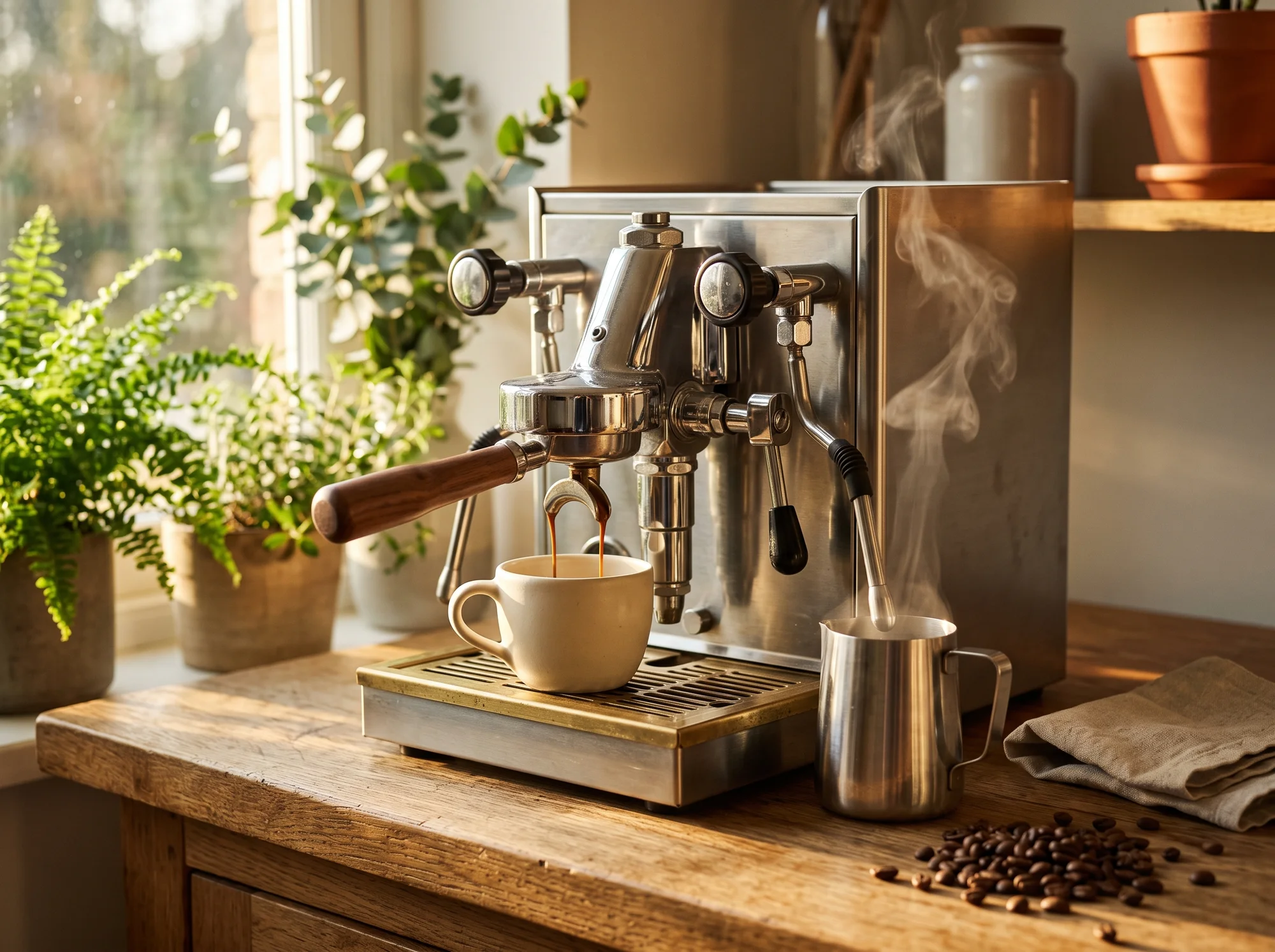
An espresso machine has to do two things that call for two different temperatures. Brew water sits around 90-96 °C; steam for milk needs water taken past 100 °C and held under pressure. How a machine resolves that contradiction is its thermal architecture, and it is the first thing to look at — before the casing material, before the number of programmes, before the display.
There are four routes. None is best in the abstract: each one pays somewhere, and knowing where is all you need in order to choose.
Single boiler
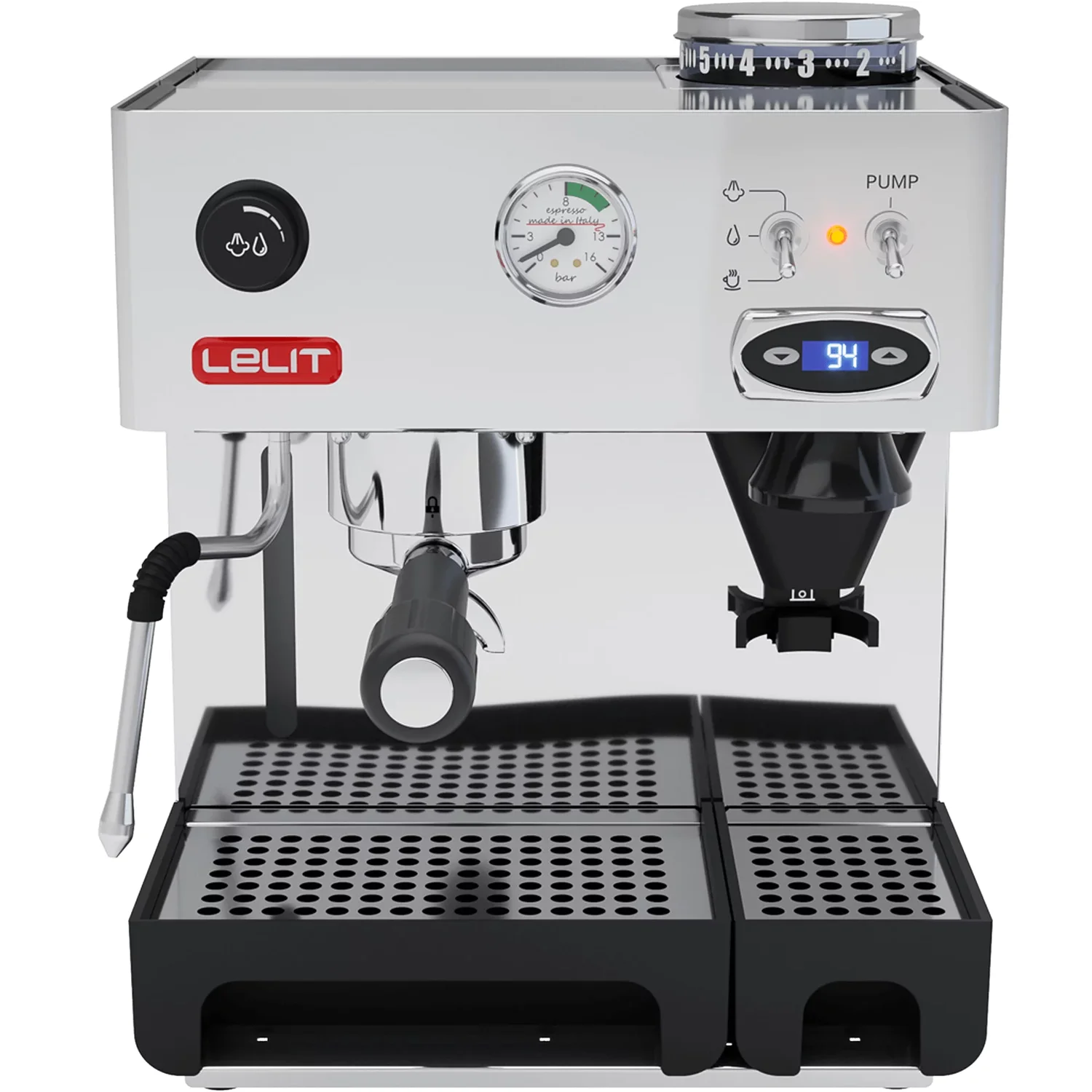
One boiler, held at one temperature at a time. You brew at brew temperature, then switch to steam and wait for the boiler to climb; to go back to coffee you wait for it to fall, and usually you have to run water through to bring it down.
It is the simplest and the most direct architecture: brew temperature is boiler temperature, so with electronic control you set it to the degree and you find it in the cup. The price is time. Two drinks that need two temperatures cannot be made together, and if you are making four cappuccinos in a row the sequence becomes an exercise in patience.
Heat exchanger
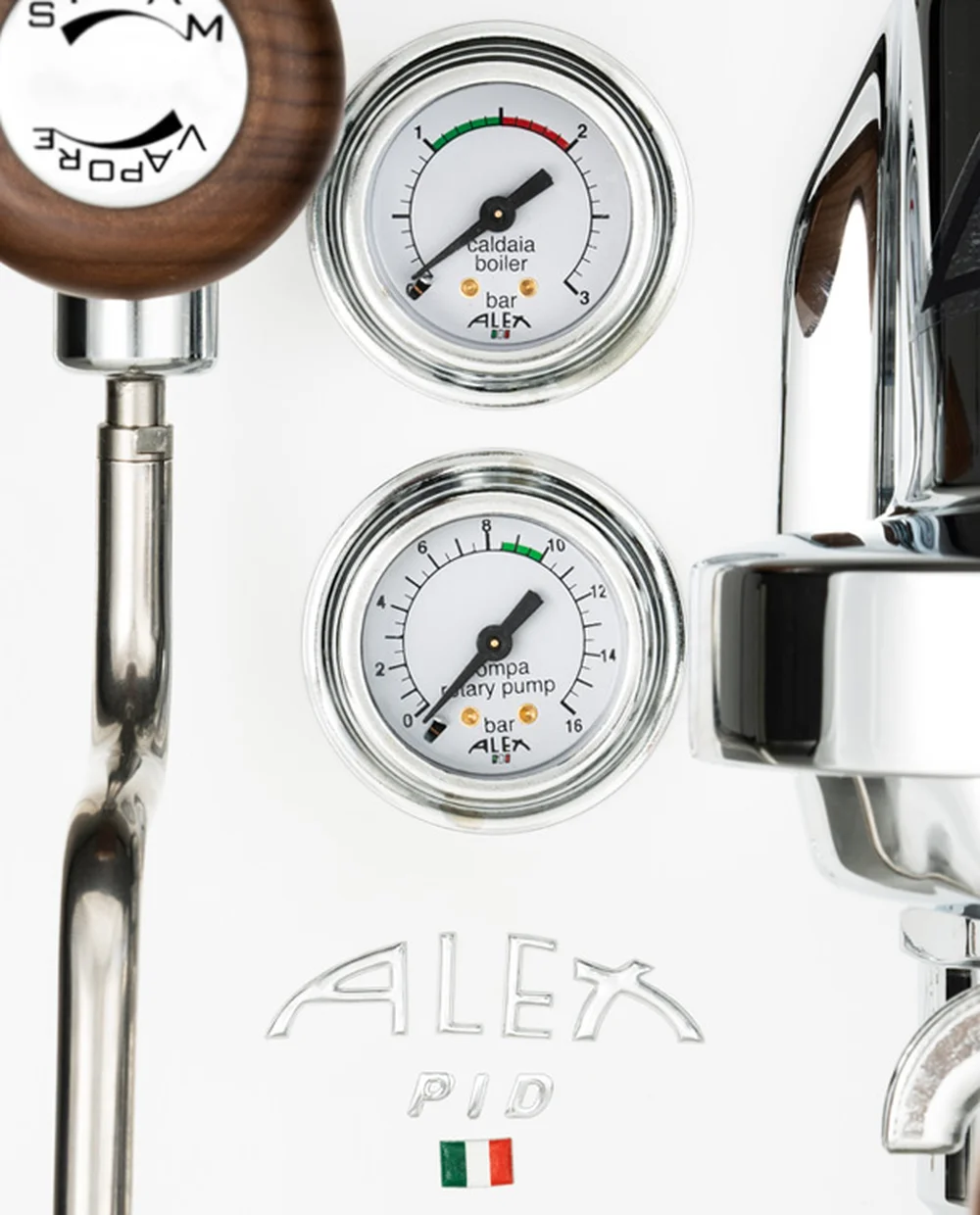
A single boiler held at steam temperature, with a tube running through it carrying the fresh water headed for the group. That water heats up on the fly as it crosses: steam and extraction are available at the same moment, from one boiler. It is the solution that ran café counters for decades.
The trade-off is brew temperature, which you do not set directly: it depends on how long that water has been sitting inside the exchanger. After a long pause it is too hot, and it has to be run off for a few seconds before extracting — the gesture everyone calls a cooling flush. It is not a fault: it is a curve to learn. On the same machine, two different people get two different temperatures.
Dual boiler
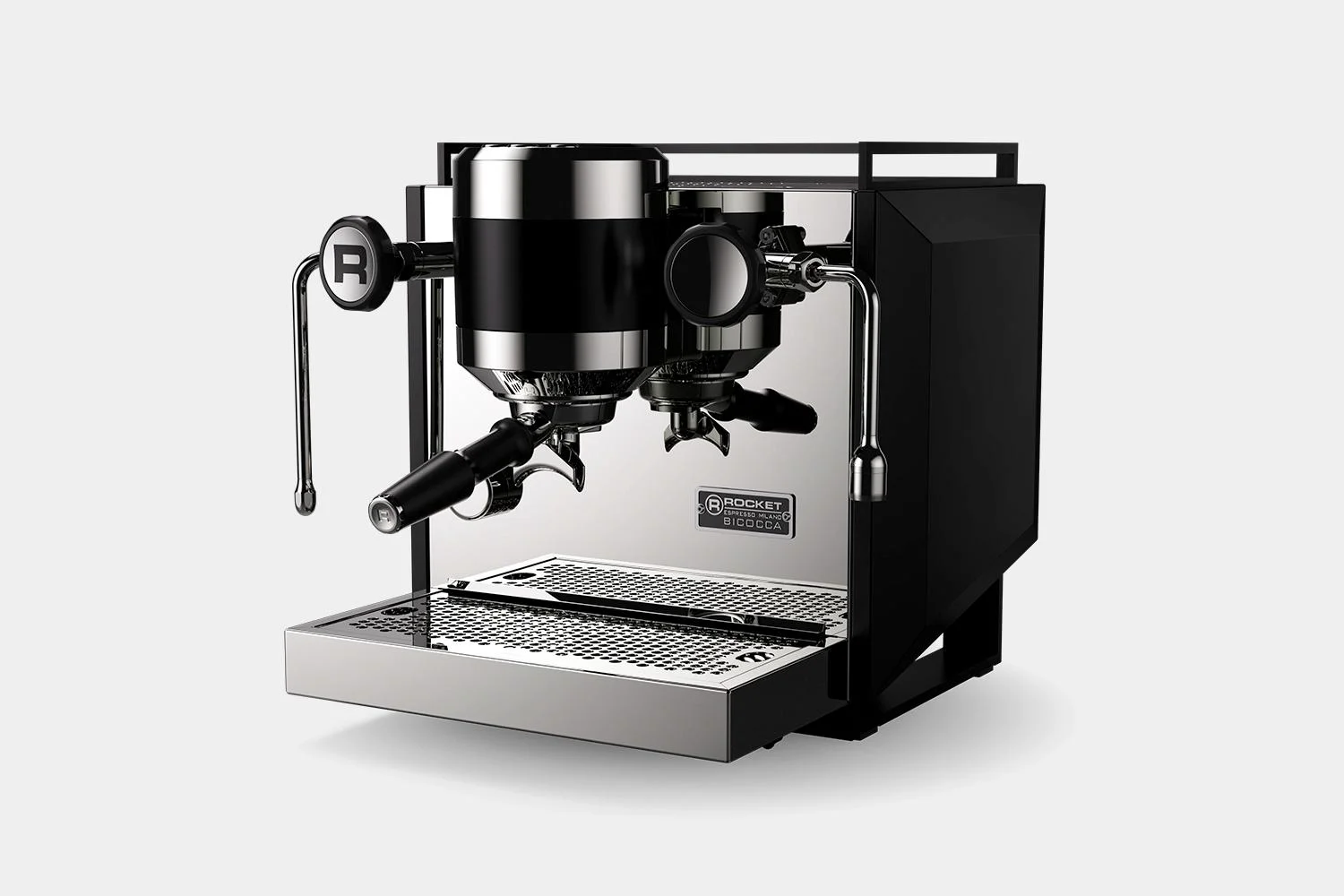
Two separate boilers, each at its own temperature: one for coffee, one for steam. You get both things with no compromise — simultaneity and a brew temperature you can set, independent of whatever the steam side is doing.
It costs in everything else: more mass to bring up to temperature, more power draw, more components that age — two elements, two probes, two safety valves. It is the architecture of professional machines and of the upper prosumer range, and not out of fashion.
Thermoblock and thermocoil
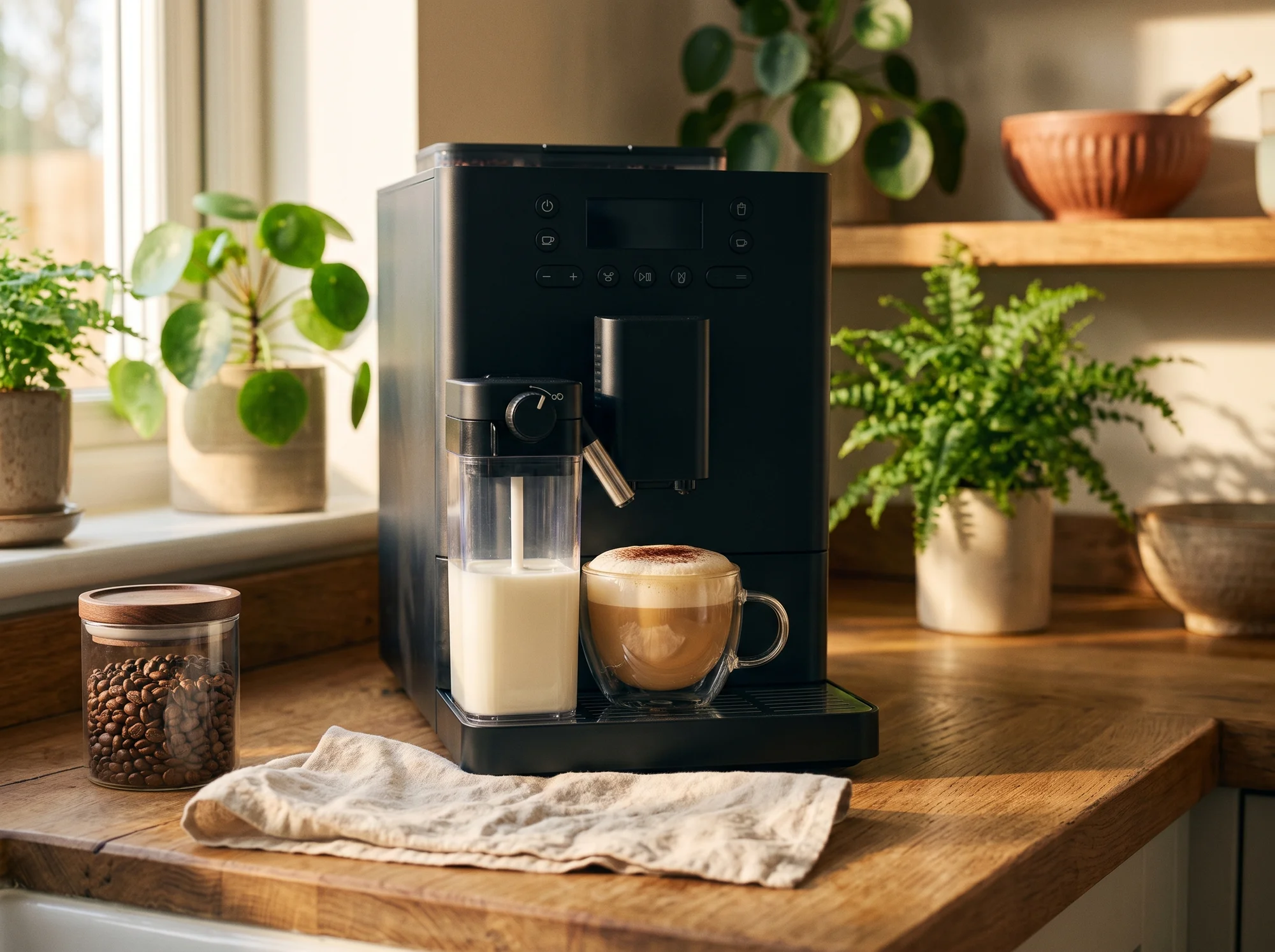
No boiler at all. Water passes through a heated metal block (thermoblock) or through a coil embedded in metal (thermocoil) and heats up as it flows. Very little thermal mass, so the machine is ready in a time no boiler comes close to, and it draws little when idle.
That same small mass is the limit: stability is not underwritten by the inertia of two litres of hot water but by the electronics governing the element moment by moment. On a well-made machine it works; on a badly made one the temperature dances. The thermocoil, which has more metal around the water path, sits between the thermoblock and a real boiler.
The four routes, on the things that matter
| Architecture | Steam while you brew | Brew temperature | What it asks in return |
|---|---|---|---|
| Thermoblock / thermocoil | Usually no | Governed by the electronics | Stability entrusted to control, not to mass |
| Single boiler | No, you switch | Direct and settable | The wait between coffee and steam |
| Heat exchanger | Yes | Indirect: depends on flow and pause | The flush, and a technique to learn |
| Dual boiler | Yes | Direct and independent of steam | Mass, power draw, more components |
What our catalogue says
As of 7 September 2026 the portafilter machines on file that declare their architecture in the manufacturer's documentation number 78: 33 dual boiler, 28 heat exchanger, 11 single boiler, 4 thermoblock, 2 thermocoil.
Read it for what it is: a snapshot of the prosumer segment, not of the market. Mass-market machines, where the thermoblock dominates by a wide margin, barely enter this catalogue. If the ratio mirrored actual sales it would be inverted. The useful fact is not which technology "wins" but that on all 78 the manufacturer states it: that is information you can check, and on the product page you find it with the source it came from beside it.
How to decide, in practice
- You mostly drink espresso and milk is occasional. Single boiler with electronic control: it gives the most governable temperature for the money, and you pay the wait only when you steam.
- Cappuccino every day, for more than one person. Heat exchanger or dual boiler. Here simultaneity is not a luxury: it is the difference between having breakfast and organising it.
- You want to set the temperature to the degree and change it between coffees. Dual boiler, without hesitating.
- Space and a few minutes' warm-up matter most. Thermoblock, knowing that stability will rest entirely on how well the control is done.
The catalogue is divided along exactly these lines: dual boiler, heat exchanger, single boiler, thermoblock, thermocoil.