Pre-infusion and pressure profiling
Before pushing to nine bar, wet the puck. And then, instead of holding one pressure from start to finish, decide how it changes. What these two gestures really do.
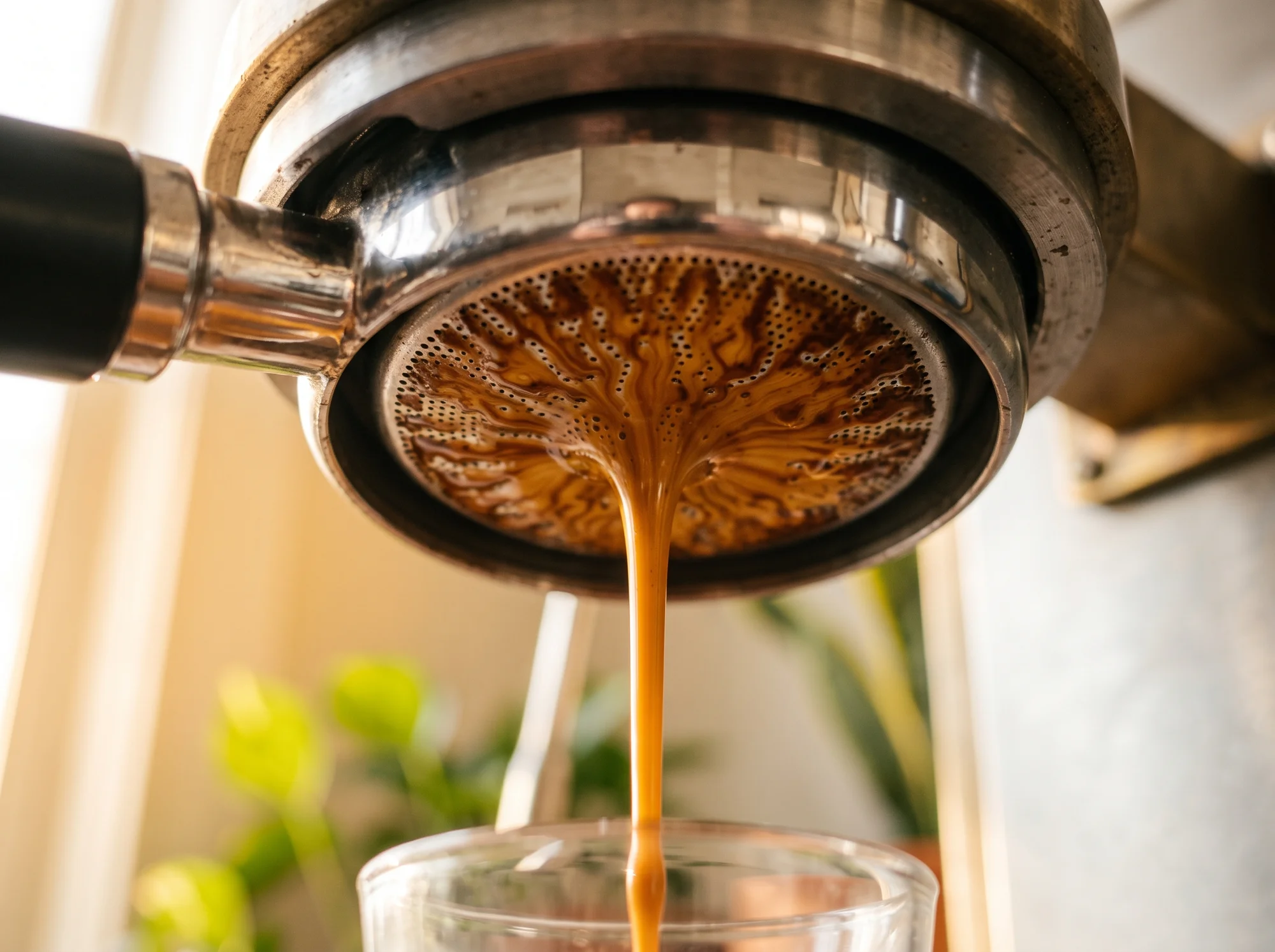
For decades espresso was told with a single number: nine bar. One pressure, constant, from the start of the shot to the end. It is a simplification that worked perfectly well while coffee was a dark blend roasted to survive anything. With lighter, more delicate coffees it began to show its limits, and machines answered in two ways: wetting before pushing, and changing the push during the shot.
What happens without pre-infusion
The coffee puck in the basket is not homogeneous: however well you distribute and tamp, there are slightly denser zones and looser ones. When water arrives suddenly at full pressure, it seeks the path of least resistance and widens it. Channels form: routes where water races, over-extracting from the walls of the channel and not at all from the rest.
The result in the cup is a coffee both bitter and sour — over-extracted where the water went, under-extracted where it never arrived. It is not a fault of the coffee: it is a fault in how the water crossed it.
What pre-infusion does
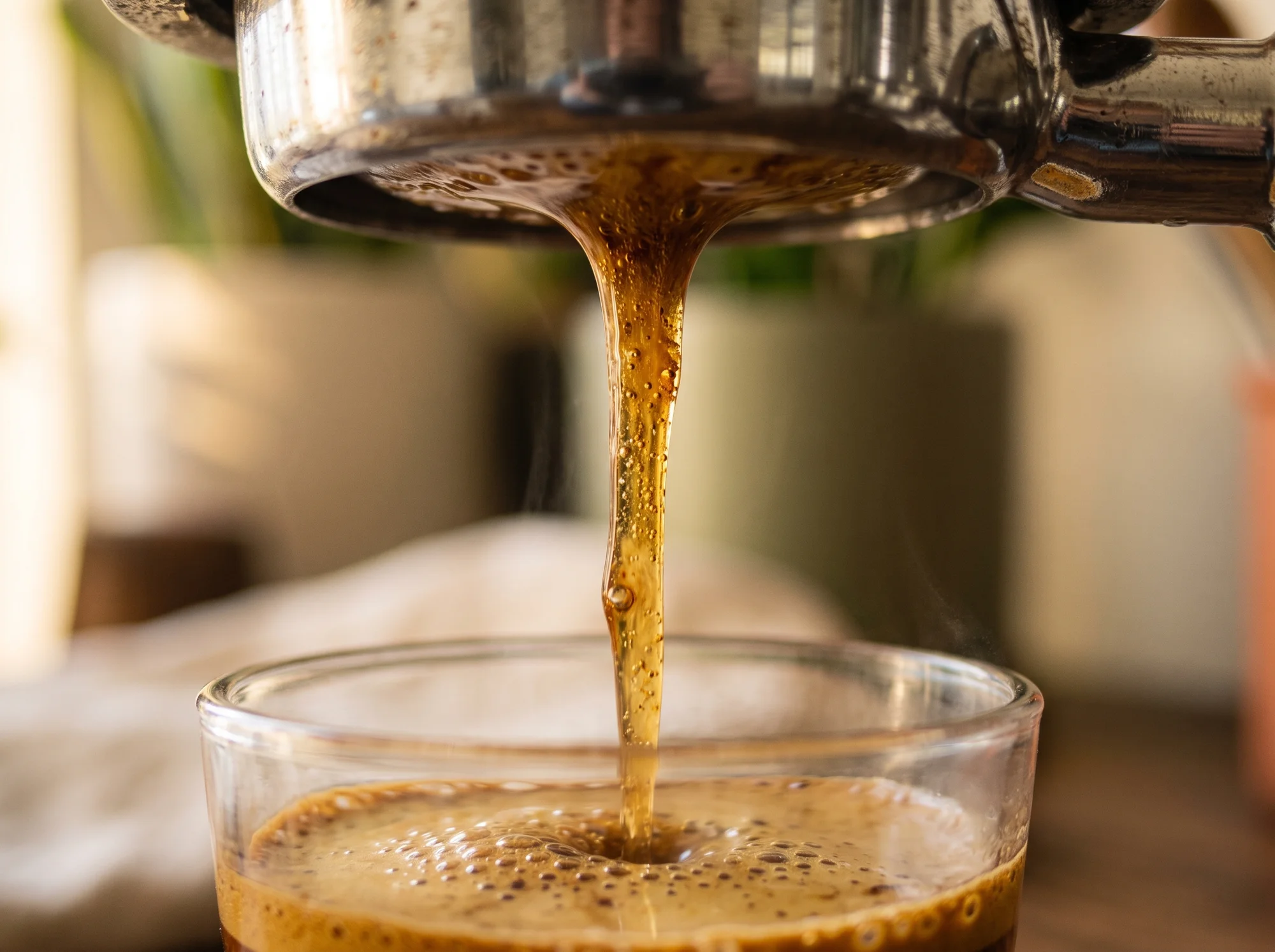
It wets the puck at low pressure for a few seconds before rising to full pressure. The coffee absorbs water and swells, voids close and differences in density even out. When full pressure arrives it finds a uniformly saturated puck, and preferential paths become far less likely.
Machines do this in three different ways, and the difference is not cosmetic.
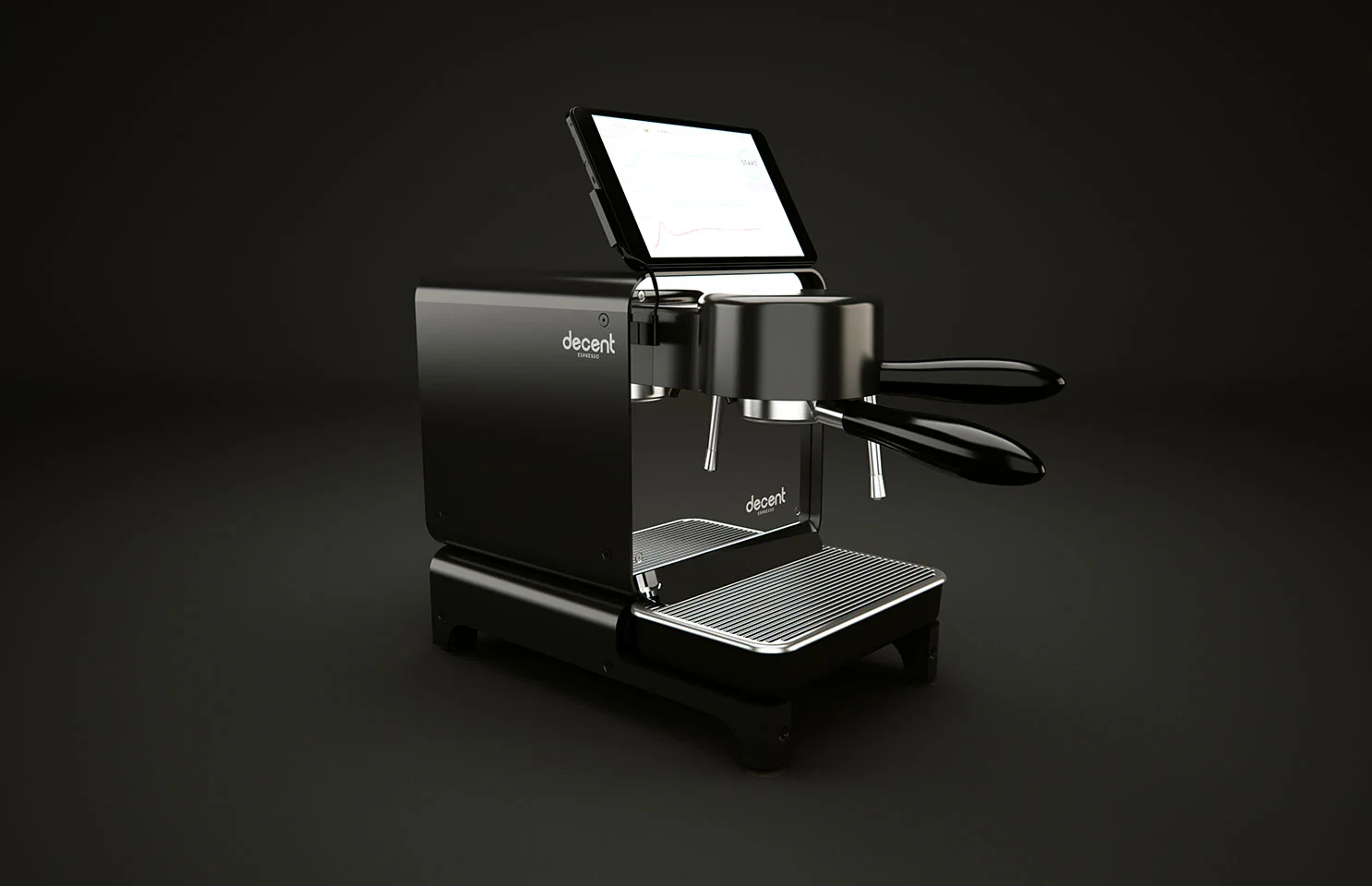
- Programmable: the electronics run the pump at low power, or do not open it at all, for a time you set. The most controllable and repeatable approach.
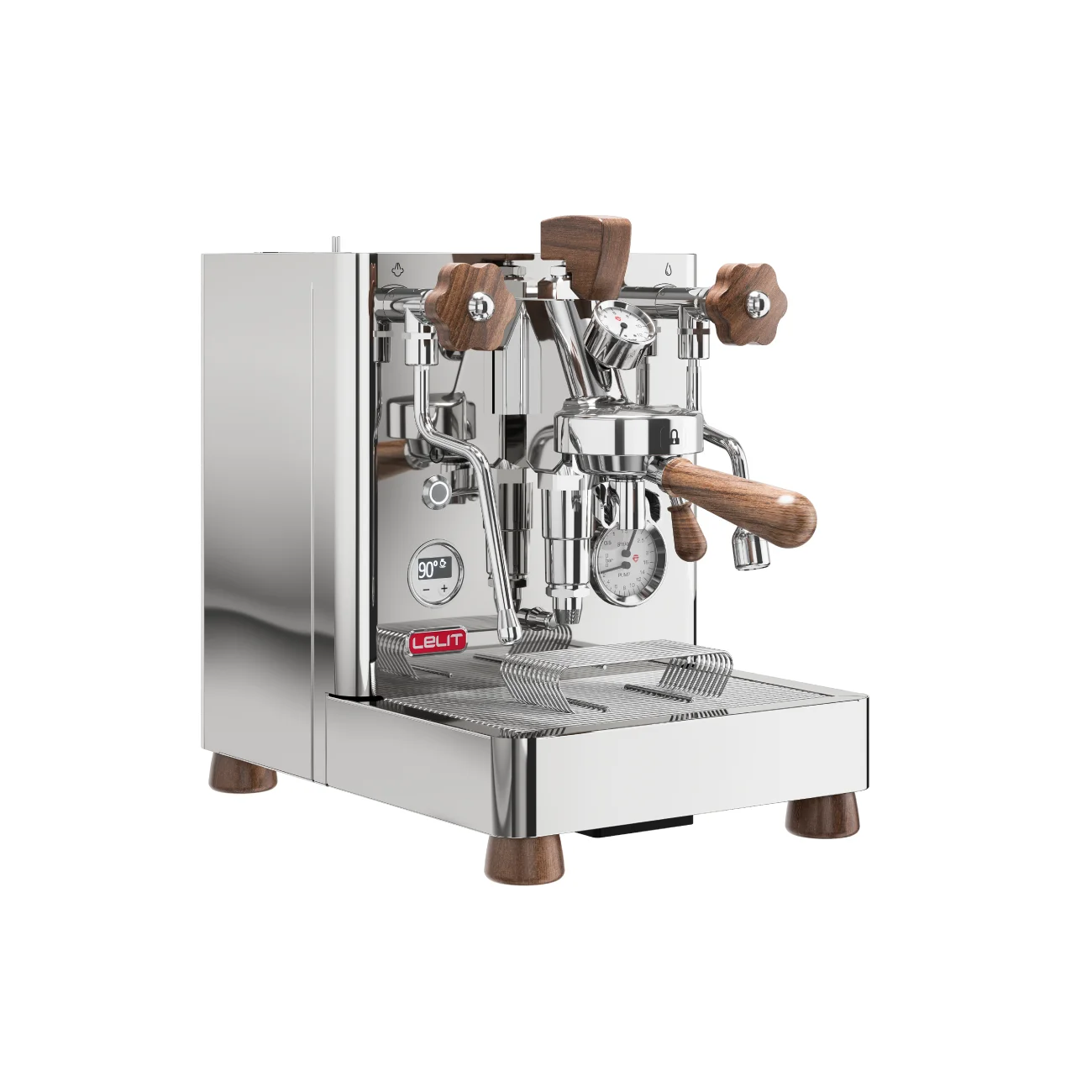
- Passive, spring-loaded (a chamber with a spring-loaded piston): water enters, fills the chamber, and the spring returns the pressure gradually. It is neither set nor programmed: it is a mechanical behaviour, always the same, that does not depend on you.
- Manual: you open and close it yourself, typically with the group lever. Maximum control, maximum variation between one time and the next.
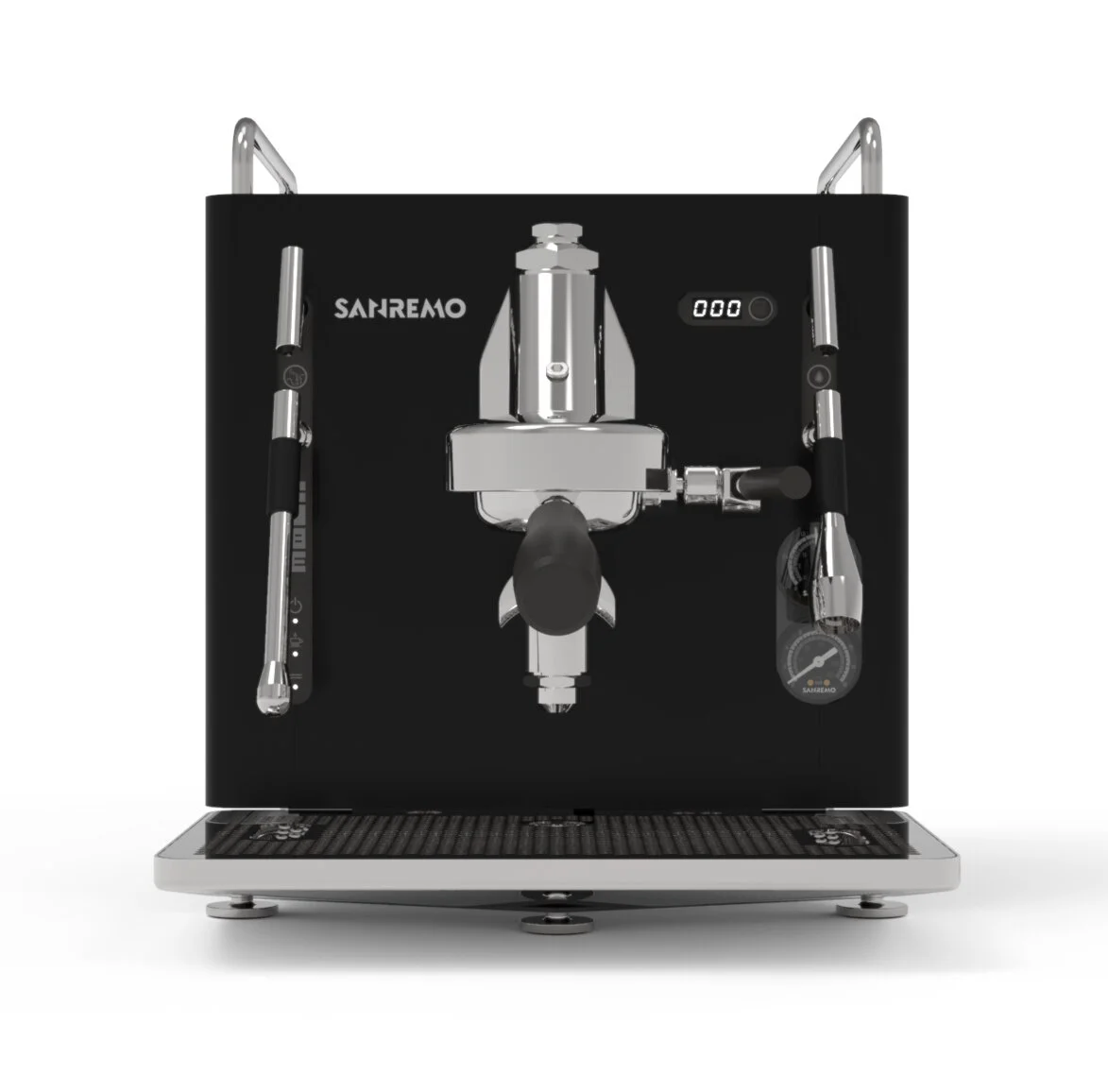
As of 7 September 2026, of the portafilter machines on file that declare a pre-infusion type (37 entries), 30 are programmable, 4 passive spring, 3 manual.
What pressure profiling does
Pre-infusion is an episode at the beginning; profiling is the governing of pressure across the whole shot. Instead of a flat line at nine bar you draw a curve: a gradual rise, a peak, then a decline towards the end.
The reason for the decline is chemical before it is mechanical. As extraction proceeds, what comes out changes: acids and sugars first, more bitter and astringent compounds towards the end. Lowering the pressure at the finish slows the flow exactly when what is emerging is no longer desirable.
In practice it is achieved in two ways: by acting on flow (a needle valve throttling the passage, often a paddle on the group) or on pressure directly (machines with electronically governed pumps, or lever machines, where the curve is drawn by the spring or by your arm).
Of the machines on file, 13 declare flow control. It is a small number, and it says clearly what profiling is today: not a standard feature, but a characteristic of a particular tier.
Does it really help, and whom
It helps, a great deal, if you work with light single-origin coffees: they are the most sensitive to channelling and the ones that gain most from a declining finish.
It helps little if you drink a dark blend in a small cup with sugar: the tolerated margin of error is wide, and time spent building a curve returns less than time spent dialling in the grind.
It helps not at all if the fundamentals are missing. Profiling does not repair a bad distribution, nor a grinder producing uneven particle sizes: it is a finishing touch, and finishing touches come last.
How to read it on a product page
On the catalogue pages pre-infusion is a filterable attribute with the declared type and its source alongside, as is flow control. Watch one word: many machines declare "pre-infusion" without specifying how they achieve it, and between a spring chamber and an electronic timer the difference in use is enormous. Where the manufacturer does not say, the field stays empty: we prefer a gap to a guess.