Flat or conical burrs
Two geometries that grind the same bean in two different ways. The question is not which is better, but what shape the cloud of particles reaching the basket has.
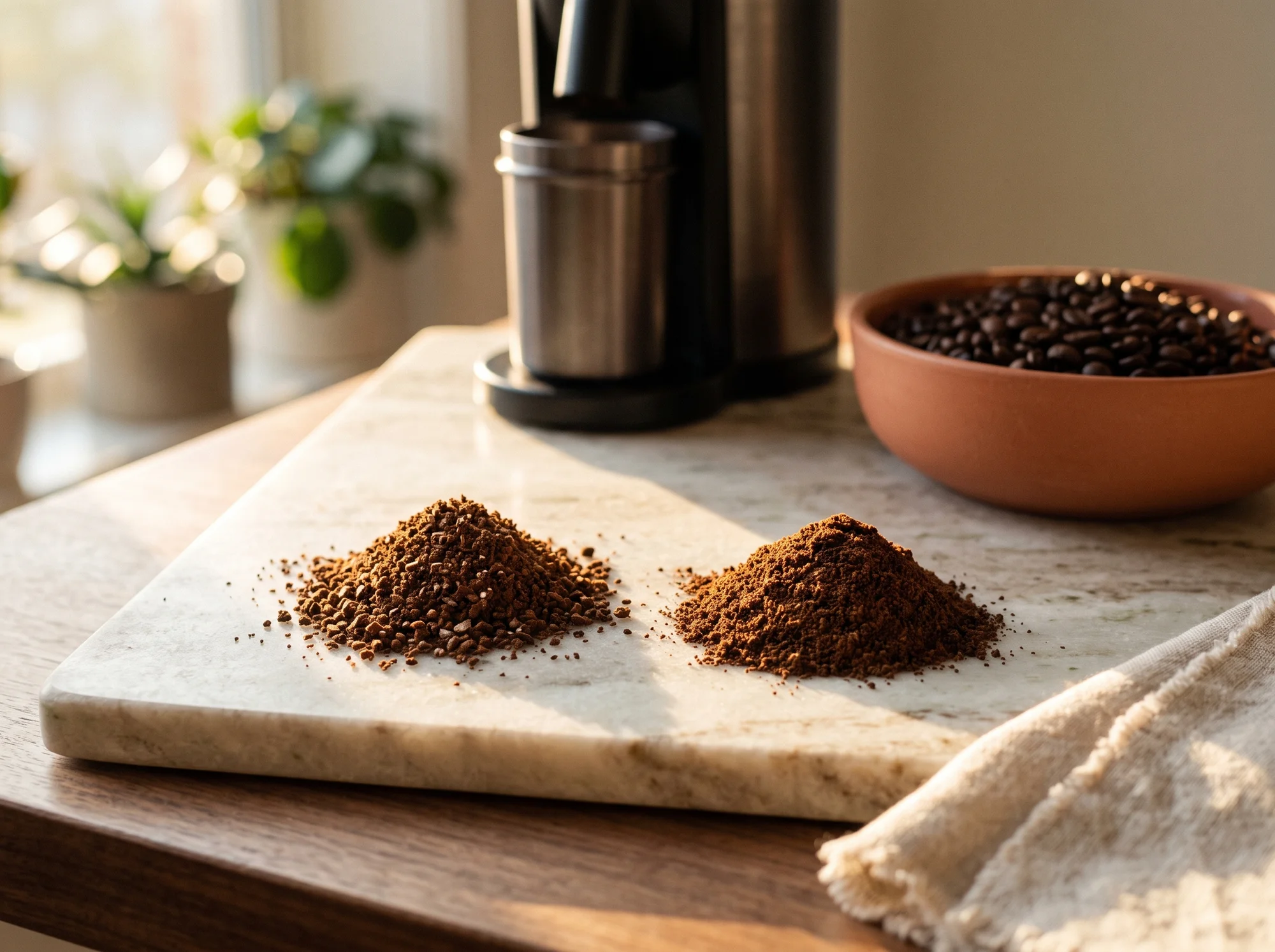
A grinder does not cut coffee: it fractures it by forcing it through a narrowing gap. The shape of that gap is the burr geometry, and it is the design choice with the greatest bearing on what reaches the basket.
How the two geometries work
Conical burrs are a cone turning inside a ring. The bean enters from above, falls by gravity into the space between the two, and is reduced as it descends towards the narrowest part. Gravity helps, so the burrs can turn slowly; turning slowly means heating little.
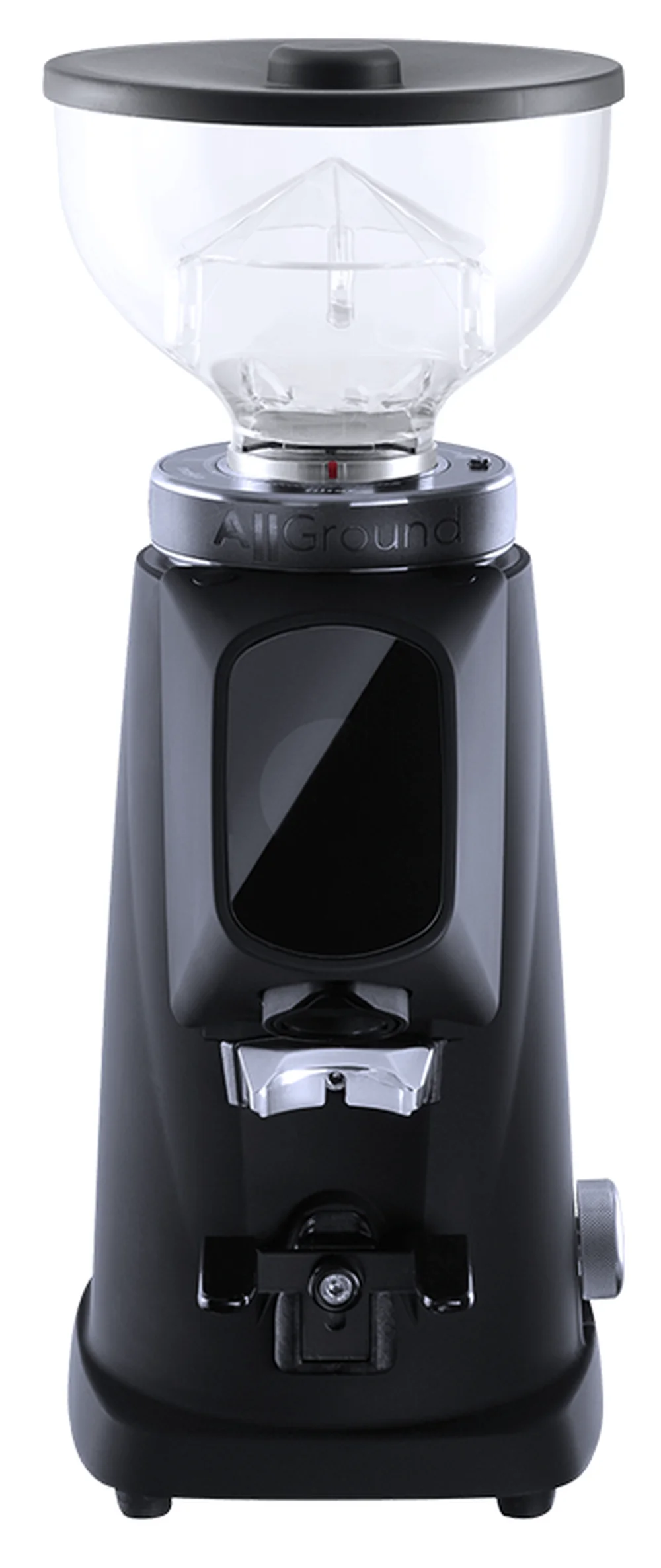
Flat burrs are two facing discs, one fixed and one turning. Coffee enters at the centre and is thrown outward by centrifugal force, grinding progressively until it leaves the rim. The path is more uniform because every particle crosses the same distance between the two surfaces, but that centrifugal force has to be produced: they turn faster, and they heat more.
Particle distribution, which is the point
No grinder produces particles that are all the same size. It produces a distribution: many particles around the target size, and tails — very fine dust on one side, coarser fragments on the other.
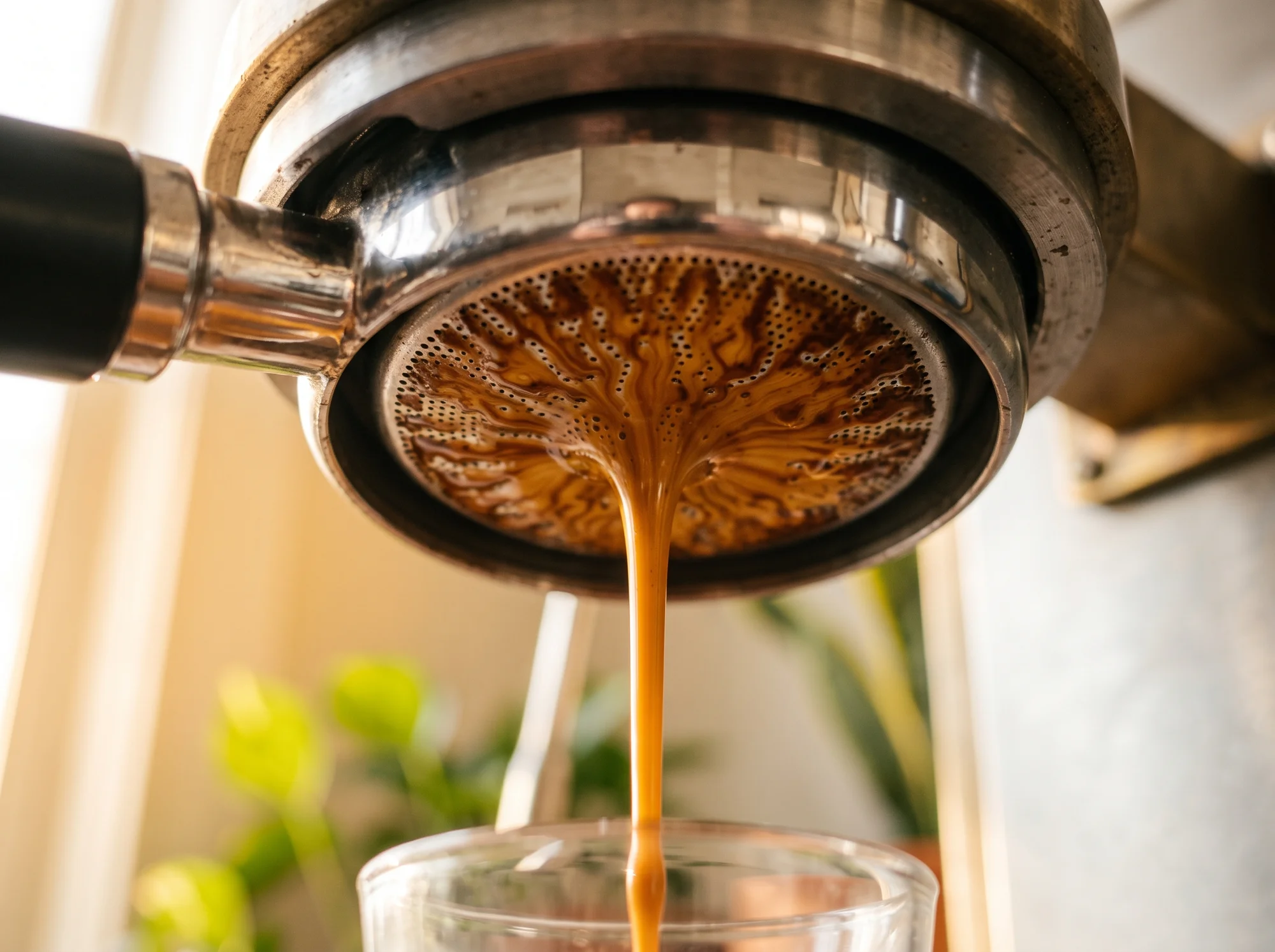
Put without oversimplifying: conical burrs tend to produce a wider distribution with two clusters; flat burrs a narrower, more concentrated one. The quantity of fines and the way they are spread change how water travels through the puck.
The consequences in the cup are often told as "conicals give body, flats give clarity". That is a useful approximation for finding your bearings and wrong if taken literally: the same geometry, with different diameters, materials, rotation speeds and cutting profiles, gives different results. Geometry is one of the variables, not the variable.
Diameter matters as much as geometry
For a given shape, larger burrs work each bean for less time and in fewer passes: coffee crosses the grinding zone faster, heats less, and the distribution stays steadier even when grinding continuously.
As of 7 September 2026 the grinders on file that declare a diameter number 39, and the values run from 38 to 83 mm. The clusters sit at 64 mm (8 models), 40 mm (7), 54 mm (6) and 83 mm (4): it is not a continuum, these are industrial formats that recur from one maker to the next.
The two geometries, on the things that matter
| Conical | Flat | |
|---|---|---|
| How coffee advances | By gravity, downward | By centrifugal force, outward |
| Typical rotation speed | Lower | Higher |
| Heat given to the coffee | Less | More |
| Particle distribution | Wider | Narrower |
| Retention | A matter of design, not shape | A matter of design, not shape |
What our catalogue says
As of 7 September 2026, of the grinders declaring their geometry (38 entries), 22 carry flat burrs and 16 conical. On bean-to-cup machines the picture changes entirely: of the 41 that declare a type, 28 use ceramic burrs and 13 conical steel ones.
That ceramic deserves a word, because it is the entry that causes most confusion: it describes the material, not the geometry. Ceramic does not heat like steel and does not corrode, but it is more brittle — a small stone among the beans, which steel shrugs off, can chip it. It therefore belongs in a different column from "flat or conical", and the two facts do not exclude each other.
How to decide, in practice
- You grind almost only for espresso and you are after body. Conical, generously sized.
- You want the same result from the first coffee to the last, even grinding a lot. Flat, and as large as possible: that is the format that stands up to repetition.
- You grind for both espresso and filter. Look first at the range of adjustment and its fineness, then at geometry: that is what decides whether one machine can serve two methods.
- You are considering a bean-to-cup machine. Geometry weighs less than being able to adjust and clean it: here you do not choose the grinder, the machine inherits it.
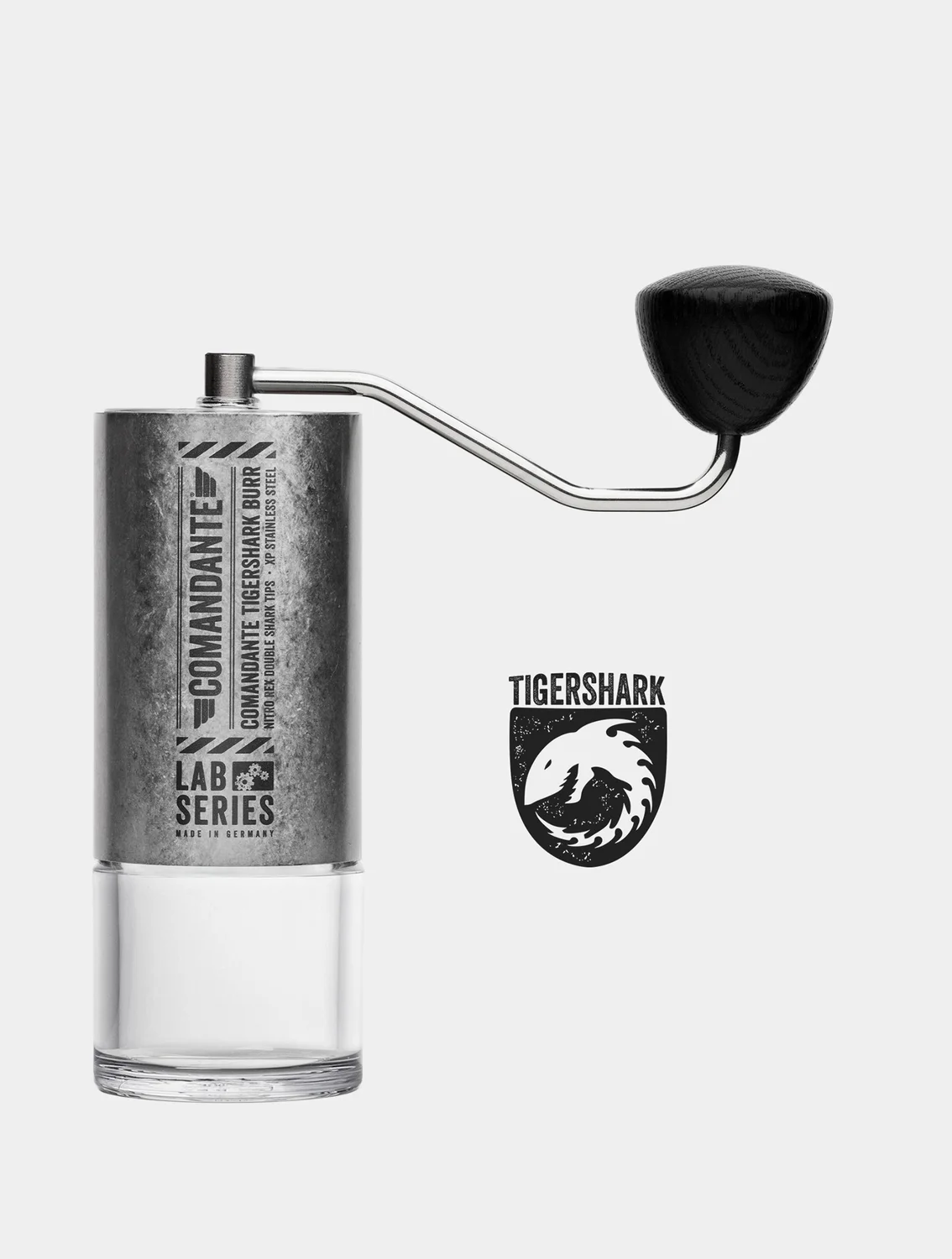
The grinder catalogue is divided by use: for espresso, all-purpose and hand grinders.