How to choose a coffee grinder
It is the appliance that decides more than any other what comes out of the machine, and it is almost always the one thought of last. What to look at, and in what order.
If there is one budget and it has to be split between machine and grinder, the obvious split — nearly all of it to the machine — is the wrong one. An excellent machine with an inadequate grinder makes mediocre coffee; an honest machine with a good grinder makes good coffee. The reason is that espresso is a pressurised extraction through a compact puck: if the particle size is not right, and above all if it is not consistent, water finds preferred paths and no adjustment on the machine repairs it.
Four variables count, and they should be looked at in this order.
1. Adjustment: stepped, stepless or micrometric
This is the first question, not the last. Adjusting means moving the burrs closer or further apart, and the way that is done decides how precise you can be.
- Stepped: preset positions, with a click. Simple and repeatable — you return to a setting you already found without hunting for it. The limit is that between two clicks there is nothing, and for espresso the right point may well sit in between.
- Stepless: no detents, free rotation. You can land exactly where you want; but you have to keep your own reference, because the machine does not give you one.
- Micrometric: stepless adjustment with a reduction ratio that turns every fraction of a turn into a minimal movement. The finest of the three, and the one that demands the most discipline.
As of 7 September 2026, of the grinders on file that declare their adjustment type (42 entries), 20 are stepped, 15 stepless and 7 micrometric.
2. Burrs: geometry, diameter, material
Flat or conical changes the shape of the particle distribution; diameter changes how fast the coffee crosses the grinding zone, and therefore how much it heats and how consistent it stays from one dose to the next. We have written about it at length in flat or conical burrs.
To choose, remember this: for the same money, bigger is better, and geometry only matters once the diameter is adequate for the use.
3. Single dosing or hopper
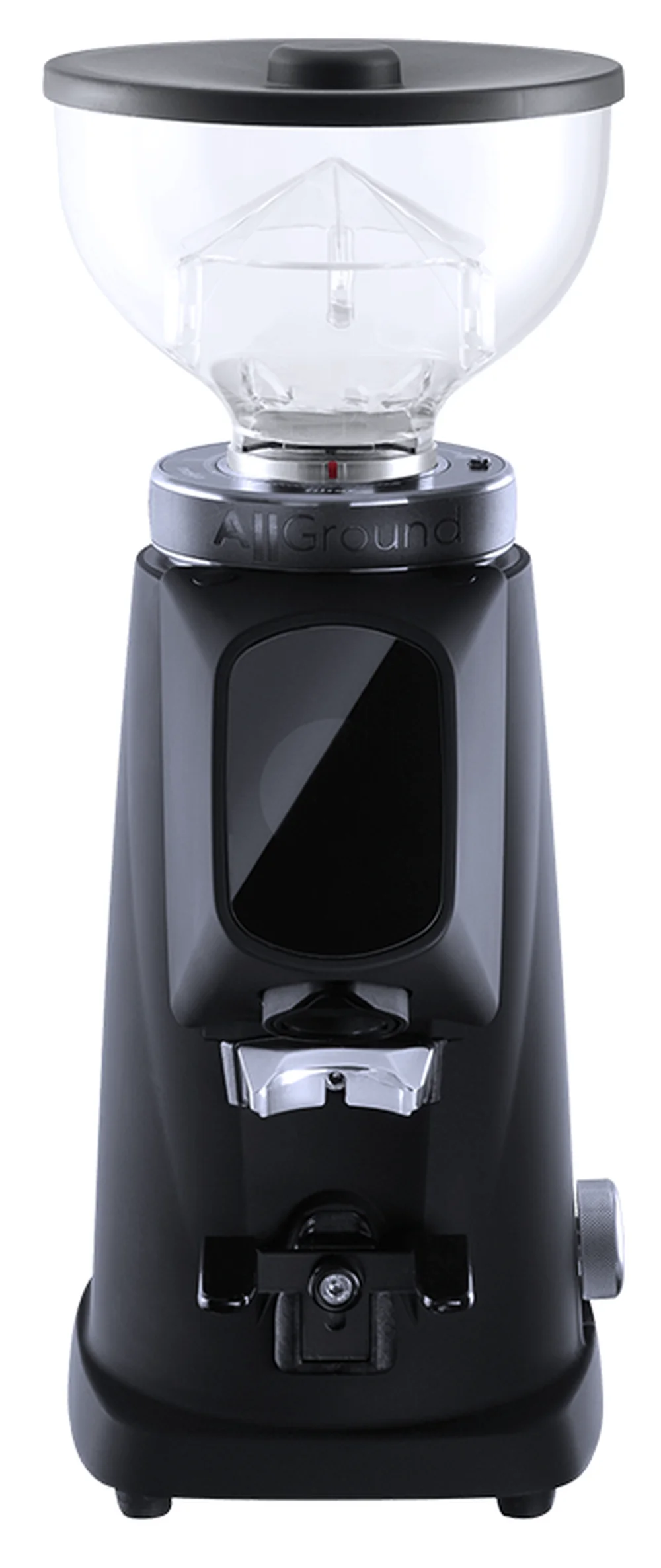
A grinder with a hopper keeps the beans above the burrs and grinds what it needs: convenient if you always drink the same coffee, and the column of beans helps push product into the burrs consistently. As of 7 September 2026 the declared hoppers in the catalogue run from 45 to 1500 g, and the value that recurs most often is 300 g.
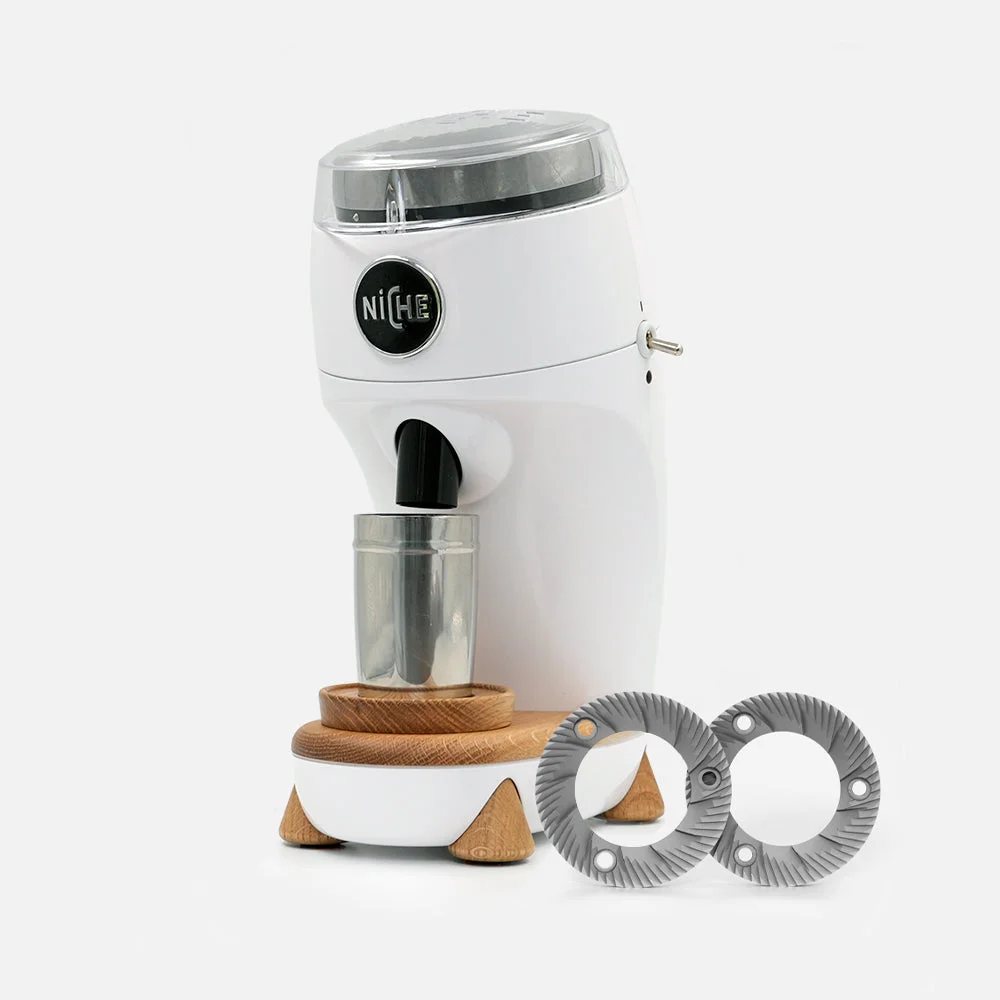
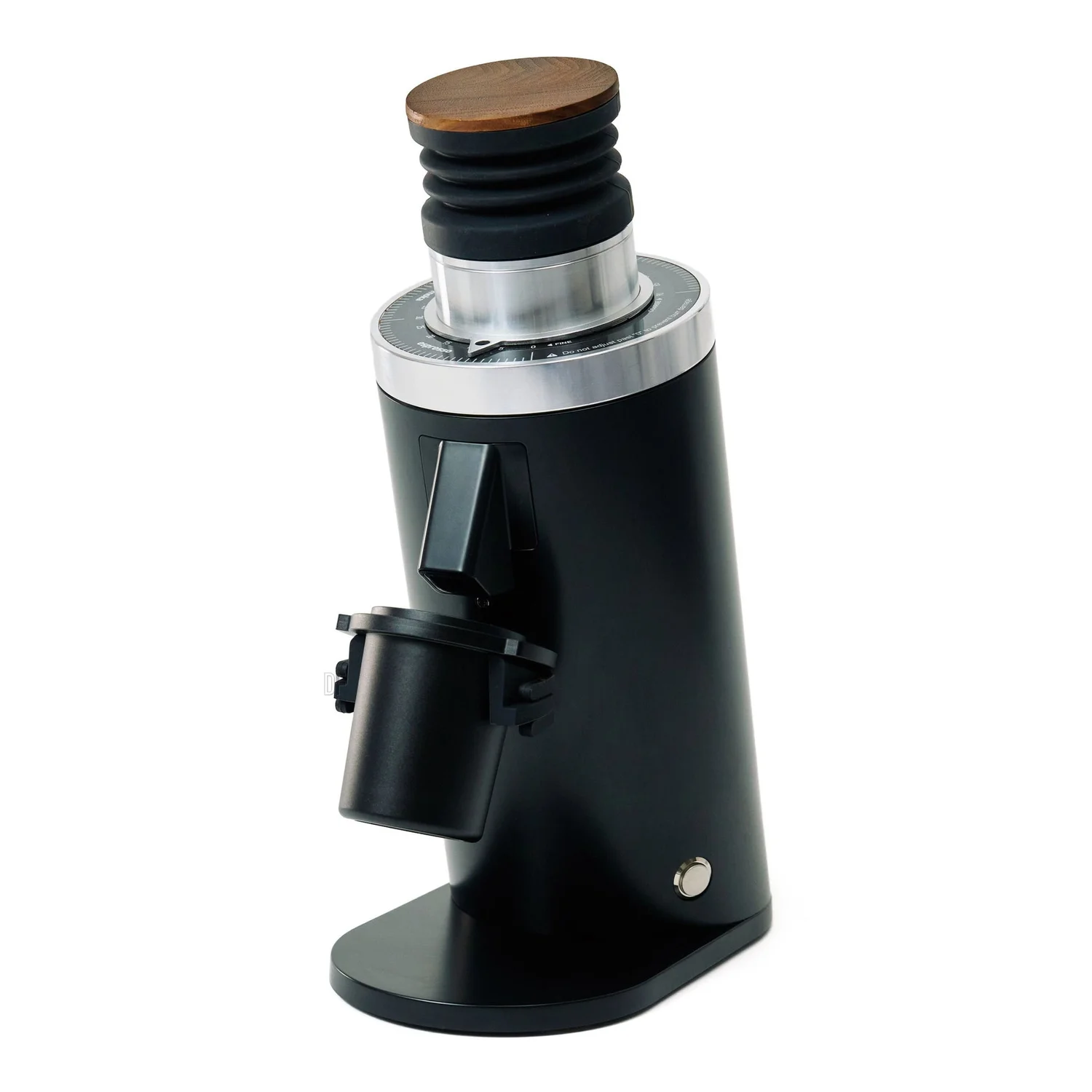
A single-dose grinder receives only the beans for that cup. You change coffee whenever you like, you leave no beans oxidising in a clear hopper under the light, and retention matters far less because each dose is emptied out. It asks for one extra gesture — weighing the beans — and for a design actually built to empty itself, otherwise the advantage evaporates.
Of the 34 entries that declare it, 9 are single-dose and 25 work with a hopper.
4. Which methods it has to serve
An espresso grinder works in a narrow, fine range; one for French press or filter has to go much coarser. The issue is not the number of clicks but where they fall: a machine designed for espresso, taken to its maximum, often does not truly reach immersion coarseness, and one designed for filter, taken to its minimum, does not go fine enough for a portafilter.
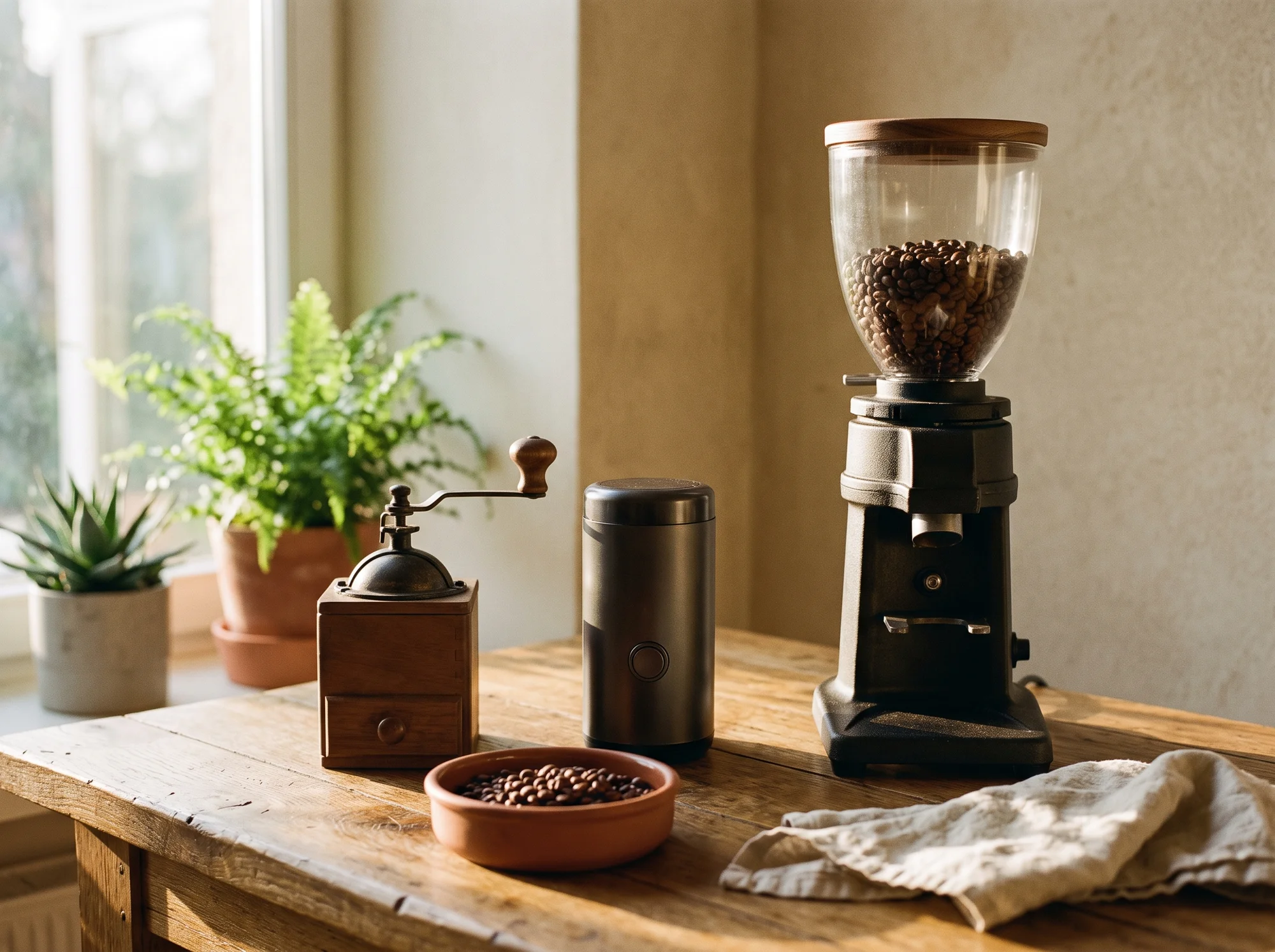
That is why the catalogue divides them by use and not by price: for espresso (19 entries), all-purpose (17) and hand grinders (9).
The things looked at last, which do need looking at
Retention — how much ground coffee stays inside after grinding — because it is yesterday's coffee ending up in today's cup.
Noise and time: a café grinder grinds in a few seconds and makes the noise it makes; in a flat at six in the morning that is not a detail.
Cleaning: the burrs have to be reachable. If getting to them means dismantling half the machine, you will not do it, and old coffee in the grinding chamber goes rancid.
How to decide, in practice
- Espresso only, one coffee at a time, and you change beans often. Single dose with stepless or micrometric adjustment.
- Espresso only, always the same coffee, several cups a day. Hopper and large burrs: that is the combination that keeps output consistent.
- Espresso and filter from one machine. Look first at the declared grind range, then at everything else.
- You grind while travelling, or you want silence. Hand grinder, accepting the time and the effort as part of the method.